Seoul’s luxury homes roar back on global demand and scarcity
Once cooled by demographics and policy, the South Korean capital’s luxury housing market is surging again, driven by confidence and global capital
For years, Chae Sang-wook, one of South Korea’s most closely watched real estate commentators and now CEO of data firm Connected Ground, warned that ageing demographics and shrinking households would sap long-term housing demand. Then, in June, he publicly reversed course. “This is a bull market. I’m changing my view to bullish for now and will watch how policy evolves.” His about-face captured a broader mood shift in Seoul, where luxury apartments are once again selling out within hours and buyers fear being priced out for good.
Analysts say the market’s renewed heat reflects rising wealth, global attention, and a surge in investor confidence—forces that have helped push Seoul into the ranks of the world’s most expensive cities. In central Seoul, apartment prices now average around USD22,875 per square metre, according to Deutsche Bank’s Mapping the World’s Prices 2025, surpassing both London and New York. Meanwhile, luxury house prices rose 18.4% in 2024, according to Knight Frank’s Prime Global Cities Index, the fastest rate among key global markets.
The numbers confirm what the skyline already suggests: Seoul has entered the upper tier of global luxury property markets, fuelled by domestic capital and an influx of overseas funds. Yet even as valuations climb, policymakers are wrestling with how to cool a market that increasingly defines both aspiration and anxiety in modern South Korea.
Unlike the stock market, which can experience dramatic crashes, apartment prices have rarely plummeted
Beneath the headline prices lies a deeper transformation in how South Koreans live and invest. The rental housing market is shifting away from the traditional jeonse deposit system toward monthly rents, fuelling demand for smaller, professionally managed homes. “As public-sector rental supply remains constrained amid a weakened construction market, private investment is set to play a growing role,” says Crystal Lee, CEO of Savills Korea. She adds that global capital—already flowing into residential assets through firms such as KKR and Morgan Stanley—is reshaping South Korea’s housing landscape.
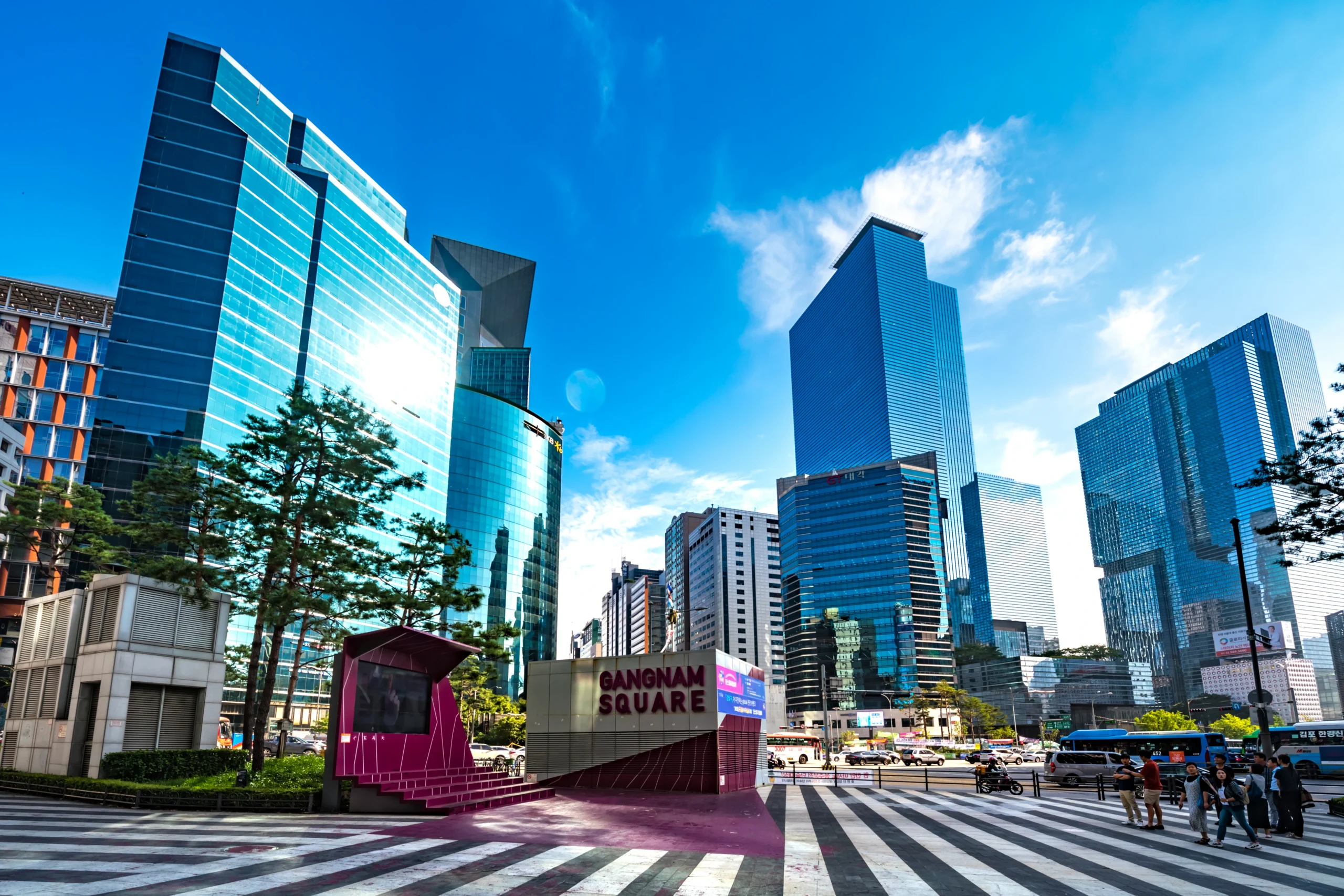
The surge in investment and shifting demand are most visible in the city’s prime districts—Gangnam, Yongsan, Songpa, and Seocho—where scarcity, prestige, and convenience converge. According to the Ministry of Land, apartments accounted for 71% of all housing purchases in Seoul between January and mid-July 2025. Data from KB Land suggest that prices in these neighbourhoods have risen by almost 50% over the past five years, far outpacing the wider metropolitan region. However, the appeal is just as emotional as it is financial.
Related: London-based firm designs South Korea’s first net-zero government building, and more news
“Unlike the stock market, which can experience dramatic crashes, apartment prices have rarely plummeted,” says Kim Jin-yoo, professor at Kyonggi University and president of the Korea Real Estate Analysis Association. “So apartments came to be seen as the safest investment in South Korea, offering the dual benefit of both practical use and long-term financial return.”
Seoul’s cultural and economic clout amplifies that emotional attachment. The same districts that symbolise domestic status also anchor South Korea’s global image—home to entertainment giants like HYBE and SM Entertainment, fashion houses in Apgujeong, and tech powerhouses clustered around Samsung Town. This overlap of culture, commerce, and innovation has made proximity itself a form of prestige, drawing residents who seek access and investors who recognise cultural gravity as translating into long-term value.
That brand power now underpins Seoul’s market strength, helping sustain demand even as prices climb. Despite soaring values, the capital remains competitive, offering newer stock and higher yields than comparable luxury markets in London or New York. Knight Frank’s Prime Global Cities Index Q4 2024 highlights Seoul’s “relative affordability, coupled with rising wealth,” as a factor continuing to attract both domestic and international buyers.
The boom has given regulators a familiar dilemma: how to cool prices without puncturing confidence. Government data show that just 24,462 units are scheduled for completion in 2026—barely half the previous year’s total—with only three large-scale complexes exceeding 1,000 units. This has added heat to a debt-fuelled market where household borrowing already ranks among the highest in the OECD.
In July, Bank of Korea Governor Rhee Chang-yong described housing as “a unique problem specific to our country,” warning that surging apartment costs are “causing social issues like the low birth rate.” He noted that household debt has reached levels that “significantly restrict consumption and economic growth.”
Related: South Korean housing market heats up with interest rate freeze
Yet despite those warnings, market sentiment remains overheated. The government’s planned KRW 20 trillion supplementary budget and the central bank’s signals of possible rate cuts have turned caution into urgency. “The Seoul market is already in panic,” says analyst Kim In-man, citing weak confidence in supply measures and expectations of lower taxes and interest rates.
Even with tighter mortgage rules and the risk of further intervention, investors remain undeterred. The appeal lies in Seoul’s fundamentals—limited prime supply, rising household wealth, and a resilient rental market—which continue to draw both domestic high-net-worth buyers and international funds.
Industry observers value Seoul’s luxury segment at between USD43–50 billion, with forecasts of 7–10% annual growth through 2030, provided regulation remains balanced and the city avoids a debt-driven correction. For now, confidence outweighs caution. “Prices will hold up in key areas, as places where many people live tend to maintain their value,” says Lee Eun-hyeong, research fellow at the Korea Research Institute for Construction Policy.
Confidence is reflected in buyer sentiment: KB Kookmin Bank’s index reached 82.98 in June, its highest since 2021. For investors, Seoul’s attraction lies in its blend of lifestyle, liquidity, and relative affordability—a combination few global cities can match. Yet as a recent Bank of Korea study observed, “in real estate, psychology is everything.” Confidence built this boom, but it may also decide how it ends.
The original version of this article appeared in PropertyGuru Property Report Magazine Issue No. 193 on issuu and Magzter. Write to our editors at [email protected].
Recommended

ARES Whitepaper Volume 4: Powering communities – The catalysts of urban evolution
Fresh perspectives on sustainability, lifestyle, and design shaping the future of real estate

ARES White Paper Volume 3: The era of adaptive reinvention
Pioneering sustainable and innovative practices in urban development

ARES White Paper Volume 2: Unravelling the power of data revolution in real estate
Insights on proptech, smart cities, and sustainable development
ARES Digital White Paper Volume 1: The fundamentals of responsible building
Green and climate heroes join forces to discuss how Asia Pacific can weather the current environmental crises and the looming effects of climate change