Allan Zeman on Phuket’s luxury evolution and the vision behind Sudara
The real estate legend is harnessing his deep knowledge to take the residential sector in Phuket to new heights
“I doubt you can still find outlooks like this anywhere on Phuket,” says Andara’s sales manager. “Or the world for that matter.”
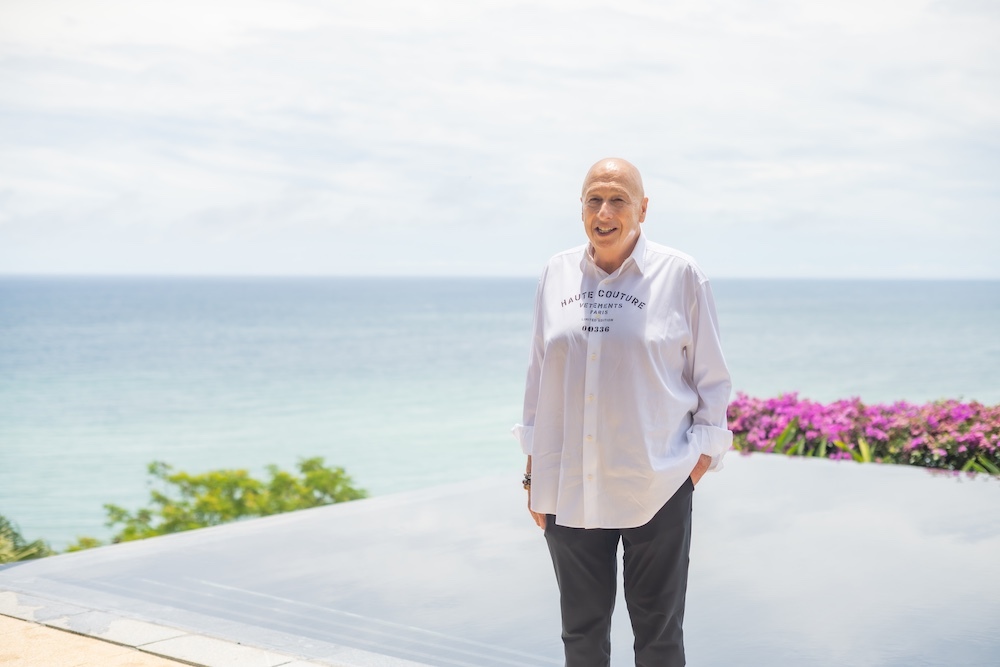
It could easily come off as sales patter. But he’s got a point. The view from one of the resort’s grandest hilltop villas is the very definition of cinematic. Kamala Bay curves below, rooftops glint on Millionaire’s Mile (a famously salubrious stretch of high-end residential homes), and the Andaman stretches out in layers of deepening blue. Even the Andara staff can’t resist a few selfies against the backdrop whilst we wait on the terrace for Allan Zeman, Asia real estate development legend and Andara mastermind, to finish a last-minute call with a prospective buyer from Hong Kong. The midday sun breaks through the clouds, bouncing off the surface of the infinity pool. It’s getting hot. Fortunately, the Provençal rosé about to be consumed with lunch is on ice. The in-villa chef checks if we’re ready for his take on Thai classics. We are.
A few minutes later, Zeman rocks up in one of his signature high-collared white shirts, yoga pants, and spotless designer trainers. Best known as the founder of Hong Kong’s Lan Kwai Fong nightlife district, Zeman developed Andara more than 15 years ago as a personal retreat that quickly turned into one of Phuket’s most luxurious resorts and helped set the tone for the island’s upscale evolution. But the topic of our alfresco lunch is Sudara, his new hillside development just down the bay. Built on a dramatic slope in Bang Tao, it’s aimed at a new generation of buyers seeking liveability, rental returns, and bold but restrained design. We also discuss Phuket’s post-pandemic renaissance, the shifting psychology of luxury buyers, and Zeman’s newfound love of Chinese EVs.
Let’s start with what you’re building now. What sets Sudara apart in today’s market?
Sudara is designed to deliver the feeling of a luxury resort at a more accessible price. That’s what people want now: something beautiful, but also smart. One of the big moves we made was putting all the parking underground. It’s rare in Phuket. Most developers avoid it because of the cost. But it completely transforms the environment. You get more space for gardens, proper landscaping, and a stronger sense of arrival. The whole place feels cleaner, more peaceful. It adds 15–20% to the cost, but it increases value and helps the project move faster. We’re also thinking about the sensory experience: lighting, textures, aromatherapy. I had a designer in just the other day to talk about scent. That’s the level of detail we’re working at. People sometimes walk into the sales office thinking it’s a spa and ask for a massage. That tells you something about how it feels.
How are buyers responding?
Interest has been strong mainly from Hong Kong, the Middle East, Europe, and Russia. We’ve seen buyers come in, look around, and make decisions quickly. When the product is good, it sells itself. Rental appeal is another draw. The market’s changed. Phuket used to have a high and low season. That’s gone. Climate change has brought new demand, especially from the Middle East. In Dubai, it’s 55°C. Here, it’s 35°C—and that feels like a relief! So, what used to be quiet months are now full. That shift has changed the rental model completely.
Are you still focused solely on residential, or are there plans for something more?
For now, we’re finishing phase one of Sudara, and that’s already got enough pre-sales for bank financing. We’re starting construction right away. Thai banks have been more conservative since the pandemic, and because of the wider geopolitical situation, but we’ve worked with them for years and built trust. We’ll roll into Phase 2 next. Originally, we were going to do three more residential blocks, but the market’s changing, so we’re keeping it flexible. Maybe a hotel, maybe something branded. You’ve got to respond to what people want and what the world looks like by the time you’re ready to build. I like to leave room to pivot. Once you start pouring concrete, it’s too late.
You’ve built a reputation for delivering not just product, but experience. What makes the Andara and Sudara brands work?
It starts with trust. People walk into an Andara villa or a Sudara unit and they feel calm, looked after, and comfortable. That’s not something you can fake. It’s about every decision from the lighting to the furniture and the layout. We’ve had so many repeat guests at Andara that they feel like part of the family. The same thing’s happening at Sudara. Homeowners from all corners of the world are coming in, feeling connected, and forming a community. That kind of loyalty gives us room to grow. We’ve also brought in someone in Bangkok to explore brand expansion, offering Andara and Sudara as management flags for other properties. There’s a real appetite for experienced operators who can deliver both standards and service. It’s the next natural step.
You’ve said Phuket is ‘growing up.’ What’s driving that shift?
It’s no longer just a holiday destination. People are choosing to live here. They’re enrolling their kids in international schools. They’re accessing quality healthcare. The airport’s strong. The lifestyle works. The shift is visible. Walk around Boat Avenue (luxury mall) at night, and you see it. People from all over the world are settled in and going about their lives. It’s still a resort, but it’s also becoming a functioning city. That changes the type of product people look for, too. It needs to suit daily life rather than just weekend escapes.
Are their expectations changing, too?
Completely. The checklist is longer. People want wellness, flexible layouts, natural light, and proper workspaces. They want to feel part of a neighbourhood. At Sudara, we’re already seeing homeowners connect. Some are from Germany, some from the UK, and others from Asia. They meet at breakfast and exchange stories. That sense of belonging happens naturally. It’s hard to quantify, but it makes a huge difference.
You’ve worked across Asia for decades. What’s your outlook on luxury real estate in the region?
Luxury used to be about surface: brands, finishes, reputation. That’s changed. Now it’s about how people use space. How it supports their routine, their health, and their values. The buyers coming in now live across regions. They work in one city, invest in another, and travel often. Property must keep up with that. It has to feel intuitive, personal, and high-functioning. Branded residences can help if the name carries weight. But execution matters more than branding. Smaller players can stand out if they’re focused and local. There’s room for everyone if the product is smart.
What about the next generation of buyers?
They’re already here. Younger investors, especially across Asia, are entering the market with different priorities. They’re less impressed by excess. They want functionality, connection to nature, and flexibility. Optionality is key. Live in it, rent it, sell it, whatever fits their moment. Developers who understand that will thrive.
How do you see proposals for casino development in Thailand playing out?
I think it’ll happen—but likely as integrated entertainment complexes, not just gaming floors. Think Marina Bay Sands in Singapore. It’ll be a full offering of hotels, shows, retail, food, and wellness. Thailand already has the brand. Tourists love it. With the right model, it could become a major draw. Phuket might even lead the way. It’s manageable, it has the airport and the infrastructure, and the demand is there. What matters is quality. If it’s done well, it’ll bring in tax revenue, tourism spend, and better public services. But it must be world-class.
What role do you want to play in that future?
I’ve been lucky to contribute to Hong Kong’s growth, and now Phuket’s. I still love the process of seeing something come to life and knowing it works for people. We’re living in an accelerated world. AI, EVs, and geopolitical shifts, for example, are all reshaping how we live and invest. Developers must anticipate more, adapt quicker, and build for longevity. I just bought an EV from China. Never thought I would! It’s packed with tech, drives beautifully, and costs a fraction of a certain German car. It’s a small decision, but it says a lot about how quickly things shift and how important it is to stay open to change. That kind of mindset matters in business. But it also matters in leadership. Progress depends on good government. You can feel the momentum in Bangkok, in Phuket, and elsewhere in the region. There’s a lot still to do. But the direction feels right.
The original version of this article appeared in PropertyGuru Property Report Magazine Issue No. 192 on issuu and Magzter. Write to our editors at [email protected].
Recommended

ARES Whitepaper Volume 4: Powering communities – The catalysts of urban evolution
Fresh perspectives on sustainability, lifestyle, and design shaping the future of real estate
ARES White Paper Volume 3: The era of adaptive reinvention
Pioneering sustainable and innovative practices in urban development

ARES White Paper Volume 2: Unravelling the power of data revolution in real estate
Insights on proptech, smart cities, and sustainable development
ARES Digital White Paper Volume 1: The fundamentals of responsible building
Green and climate heroes join forces to discuss how Asia Pacific can weather the current environmental crises and the looming effects of climate change