Macau market weakness persists despite economic rebound signs
As Macau’s gaming revenues surge back to life, its residential property market remains stuck on a losing streak, with little sign yet of a policy jackpot
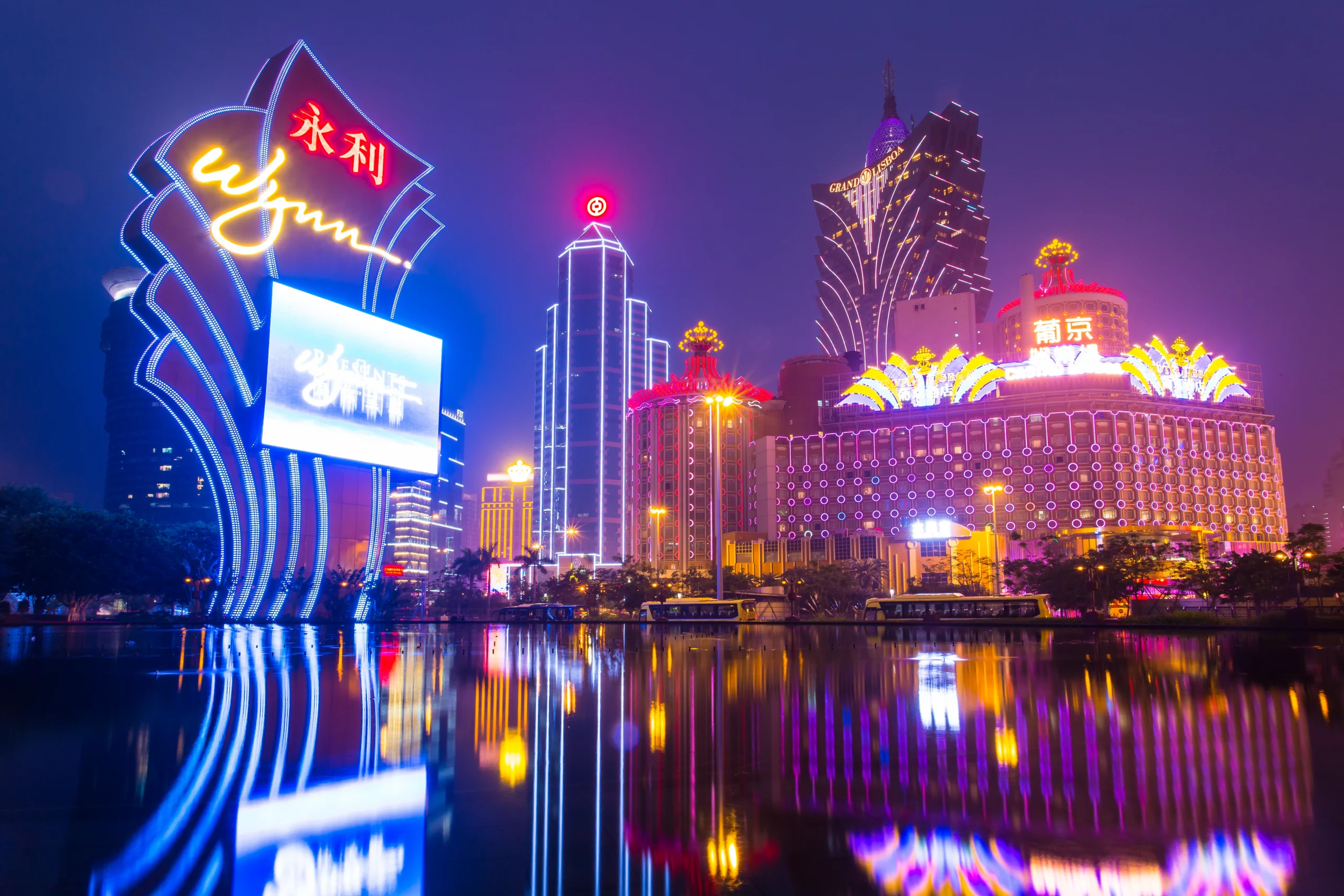
Macau’s housing market slump remains one of the most severe in the city’s modern history. In late August, the Macau General Association of Real Estate reported that home prices had plunged 40% from their 2018 peak, with the pace of decline accelerating. Between mid-2024 and mid-2025 alone, values fell 30%, accounting for three-quarters of the total drop since 2018. For homeowners, the impact has been brutal: equity has “evaporated” even as mortgage payments continue on properties now worth far less than their purchase price.
With just 200,000 housing units—compared to 450 million on the mainland—Macau’s property crisis has been dwarfed by China’s broader slump. Yet prices here have fallen faster and further than in either Mainland China or neighbouring Hong Kong, leaving developers and agents alike hoping for decisive intervention from the government.
According to the Statistics and Census Service (DSEC), prices fell again between June and August, slipping 0.8% following a 1.1% decline the previous quarter. In a larger market, that might suggest the downturn is nearing its end. But with only around 3,000 residential transactions annually across the territory, the numbers remain too thin to signal a rebound, says Cindy Liu, head of valuation and professional services at Savills Macau.
A brighter note, Liu adds, comes from pre-sales. They rose to 13% of total transactions through August, up from 7.5% in 2024. These higher-priced, off-plan units have helped support average price levels, even as the second-hand segment struggles. Still, developers are scaling back new projects amid the downturn, and land supply remains chronically limited. “Based on current data, it is premature to conclude that the market has reached its bottom,” Liu says.
Macau’s wider economy—driven by its casinos—has endured two major shocks in recent years. The first was the Covid-19 pandemic and lockdowns. The second came in 2022, when a new gaming law ordered the closure of “satellite casinos” operating under larger concessionaires’ licenses. Roughly half of Macau’s 18 satellite casinos have already shuttered, with the rest set to close by 2026.
The local economy is still undergoing gradual recovery and structural change, and consumer spending has yet to fully rebound
The flipside is that overall gaming revenue reached a post-pandemic high of MOP22.16 billion (USD2.8 billion) in August, up more than 12% year on year, while total visitor numbers are expected to hit record highs in 2025.
“The local economy is still undergoing gradual recovery and structural change, and consumer spending has yet to fully rebound,” says Mark Wong, senior director of valuation and risk advisory at JLL Macau. “Sustained gaming growth could eventually support property demand.”
Interest rates have played a similarly double-edged role. In mid-September, the Monetary Authority of Macau trimmed its base rate by 25 basis points to 4.5%. Some commercial banks followed suit: HSBC, for example, cut its prime rate from 5.5% to 5.375%.
“The September base rate reduction has provided some relief for existing owners, particularly by improving mortgage affordability,” says Wong. “However, the impact remains limited, as buyer sentiment is still weak in the absence of targeted government policy.”
A bigger concern is the Macau Interbank Offered Rate (MAIBOR)—the benchmark for developer loans—which peaked at 5.6% in 2023. The high cost of borrowing forced many developers into distressed sales to repay debt. Though MAIBOR has now fallen to just over 3%, it remains far above the 0.2% rate that fuelled Macau’s property boom in 2019.
Related: Why policy, sentiment, and design matter in Hong Kong real estate
“Higher borrowing costs have placed considerable strain on developers,” Liu says. “The wave of distressed sales has been a major factor in the ongoing decline in residential prices.”
For now, the city’s property market remains in limbo, awaiting direction from policymakers. The Macau government’s annual policy address in November is expected to make housing a top agenda item.
Then chief executive Ho Lat Seng extended tax waivers for local buyers and landlords and continued temporary housing subsidies—but offered little in the way of structural measures to revive the sector. His successor, Sam Hou Fai, may not have that luxury.
“The year’s policy address could be a key factor for the local housing market,” says Liu. “The market is closely monitoring for potential measures aimed at supporting the property sector.”
Until then, Macau’s property players—like its gamblers—can only wait and hope for a change in fortune.
The original version of this article appeared in PropertyGuru Property Report Magazine Issue No. 193 on issuu and Magzter. Write to our editors at [email protected].
Recommended

ARES Whitepaper Volume 4: Powering communities – The catalysts of urban evolution
Fresh perspectives on sustainability, lifestyle, and design shaping the future of real estate

ARES White Paper Volume 3: The era of adaptive reinvention
Pioneering sustainable and innovative practices in urban development

ARES White Paper Volume 2: Unravelling the power of data revolution in real estate
Insights on proptech, smart cities, and sustainable development
ARES Digital White Paper Volume 1: The fundamentals of responsible building
Green and climate heroes join forces to discuss how Asia Pacific can weather the current environmental crises and the looming effects of climate change