What Johor’s data centre boom means for those living beside it
Malaysia’s data gold rush is reshaping the state, testing the balance between investment and liveability
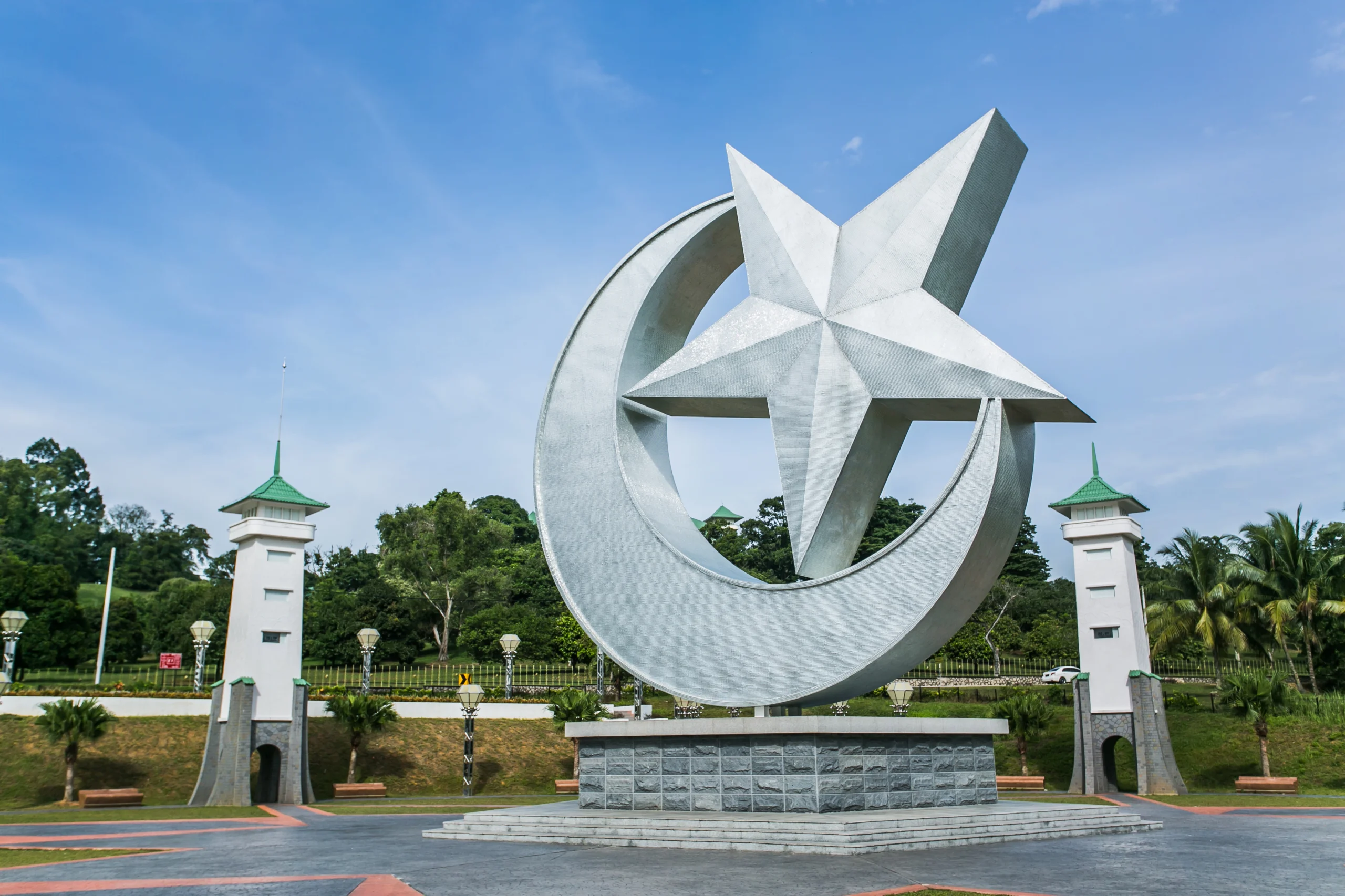
In Iskandar Puteri, Malaysia’s data centre boom has reached the edge of daily life. Near Taman Nusa Bayu and Taman Nusantara Prima, residents have watched as cleared land, construction hoardings, cement trucks, and dust have replaced the green buffer that once stood behind their homes.
The land rush is no longer a distant story about artificial intelligence or foreign capital. It now arrives as dust on parked cars, on traffic outside homes, and as a daily disruption for the communities living beside it. Just beyond the last row of houses, ZData and NTT Data sites mark the front line of a surge that has placed Johor under regional scrutiny.
By February 2026, unease had escalated from complaints to public protest. Residents in Nusa Bayu staged a demonstration calling for greater transparency over Johor’s data centre plans, including their potential impact on local power and water supplies.
In March, Kota Iskandar assemblyman Datuk Pandak Ahmad acknowledged the planning issue, telling the media it was “unfortunate” the project was “too close to four residential estates”. Pandak said future data centres should be located away from homes, with planned industrial and technology hubs such as the Southern Industrial and Logistics Cluster and Nusajaya Tech Park considered more appropriate. Where centres are built near residential areas, he said, “ideally there should be some consultation or negotiations with us, so that data centres can exist without causing much trouble to the public.” He added that the controversy should serve as a lesson for future projects.
Malaysia has spent recent years positioning itself as a regional digital infrastructure hub, benefitting from Singapore’s constraints, rising AI demand, and investment-friendly policies. The Malaysia Digital Economy Corporation said digital investments reached MYR163.6 billion in 2024, with data centres and cloud infrastructure accounting for 76.8% of approved digital investments.
Related: Industrial heat meets residential cool across Malaysia real estate
By late 2025, Johor had approved 51 data centre projects representing MYR182.96 billion in investment, according to figures from Johor housing and local government committee chairman Mohd Jafni Md Shukor.
Recent JLL Malaysia research notes that the country’s data centre capacity is set to more than double to 2,055MW by the end of 2026, with Johor among Asia Pacific’s fastest-growing markets.
For developers, the best sites are no longer simply large plots of land. They are sites that can be connected to power, fibre, water, and planning approvals quickly enough to build. The research also found Johor industrial land prices rose to an average of MYR86 per square foot in 2025, up 8.4% year-on-year, with data centres among the principal drivers of demand. Digital Edge’s April purchase of an industrial site in Kota Tinggi worked out at around MYR160 per square foot. The gap between those figures illustrates the premium now attached to land that can be matched with power, roads, drainage, fibre routes, and water infrastructure.
Keith Eng, JLL Malaysia capital markets senior director, has warned of longer waits to connect to the grid, ranging from “about 24 months for some emerging markets” to “up to eight years in certain core markets”.
The pressure is already visible in electricity demand. Consumption in Peninsular Malaysia rose 11.5% year-on-year in April and was largely met by a 50.5% surge in gas-fired generation, according to data from Malaysia’s Grid System Operator. Analysts also expect power demand to continue rising over the coming years, driven largely by data centres currently under construction.
In Malaysia, as in many countries, the distinction between marketed green and genuinely sustainable data centres lies in the depth and scope of their approach
Power is only one part of the strain. As developers look beyond established technology parks, more projects are being proposed near residential areas, bringing construction traffic, drainage concerns, dust, and rising utility demand closer to existing communities. Complaints have centred on dust, noise, land clearing, traffic, and flooding.
Water raises the longer-term question. Colin Timothy Santhakumar, senior assessor at Malaysian green building certification body GreenRE Sdn Bhd, estimates that a typical 100-megawatt facility can consume around 4.2 million litres of water a day, equivalent to the daily domestic use of roughly 18,000 to 20,000 Malaysian households. That scale of demand is why he is cautious about narrow sustainability claims.
“In Malaysia, as in many countries, the distinction between marketed green and genuinely sustainable data centres lies in the depth and scope of their approach,” Santhakumar says. “Marketed-green facilities often highlight isolated features, such as a competitive Power Usage Effectiveness (PUE) rating or rooftop solar installations, without addressing broader impacts.”
Efficiency metrics matter, but they are not a complete environmental assessment. Power Usage Effectiveness, Water Usage Effectiveness (WUE), and Carbon Usage Effectiveness (CUE) help measure operational performance, but Malaysia’s electricity mix, water sourcing, and lifecycle emissions must also be taken into account.
“Greater emphasis should be placed on the Renewable Energy Factor, or equivalent procurement of clean energy, to reduce reliance on carbon-intensive grid power,” Santhakumar says. “Additionally, the sourcing and type of water deserve equal attention alongside raw WUE optimisation.”
Related: Balancing growth and sustainability in Malaysia’s property market
In Johor, those concerns have moved beyond sustainability claims and into government decision-making. Johor chief minister Datuk Onn Hafiz Ghazi told the media that the state would “never approve any project, including data centre developments, if it brings hardship to the people” and would not “gamble with the people’s welfare merely to attract major investments”. Applications are assessed by a state coordinating committee that reviews water and electricity requirements. “If a data centre demands a high intake of water, we will not approve it,” he added.
At the federal level, Malaysia’s Guideline for Sustainable Development of Data Centres sets out key performance metrics and best practices, while the Data Centre Task Force coordinates policy. Santhakumar describes the framework as technically sound but says “voluntary adherence is no longer adequate” as the sector expands.
Enforcement remains complicated by Malaysia’s federal-state structure. Digital investment policy may be shaped nationally, but land, water, and local planning largely remain the responsibility of state authorities.
That leaves Malaysia trying to reconcile national investment ambitions with local infrastructure constraints. The country remains well positioned to attract regional data centre investment, but speed and scale alone will no longer be enough. Johor demonstrates that the next stage of growth will depend on the power that can be supplied, the water use that can be justified, the cooling systems that can be explained, and communities that are brought into the planning process before the costs arrive on their doorstep.
The original version of this article appeared in PropertyGuru Property Report Magazine Issue No. 197 on Issuu and Magzter. Write to our editors at [email protected].
Recommended

ARES Whitepaper Volume 4: Powering communities – The catalysts of urban evolution
Fresh perspectives on sustainability, lifestyle, and design shaping the future of real estate

ARES White Paper Volume 3: The era of adaptive reinvention
Pioneering sustainable and innovative practices in urban development

ARES White Paper Volume 2: Unravelling the power of data revolution in real estate
Insights on proptech, smart cities, and sustainable development
ARES Digital White Paper Volume 1: The fundamentals of responsible building
Green and climate heroes join forces to discuss how Asia Pacific can weather the current environmental crises and the looming effects of climate change