6 homes where luxury finds its character
Asia’s ultra-wealthy want more than square footage—they crave stories, values, and vision. Developers are responding with bold, meaning-driven creations
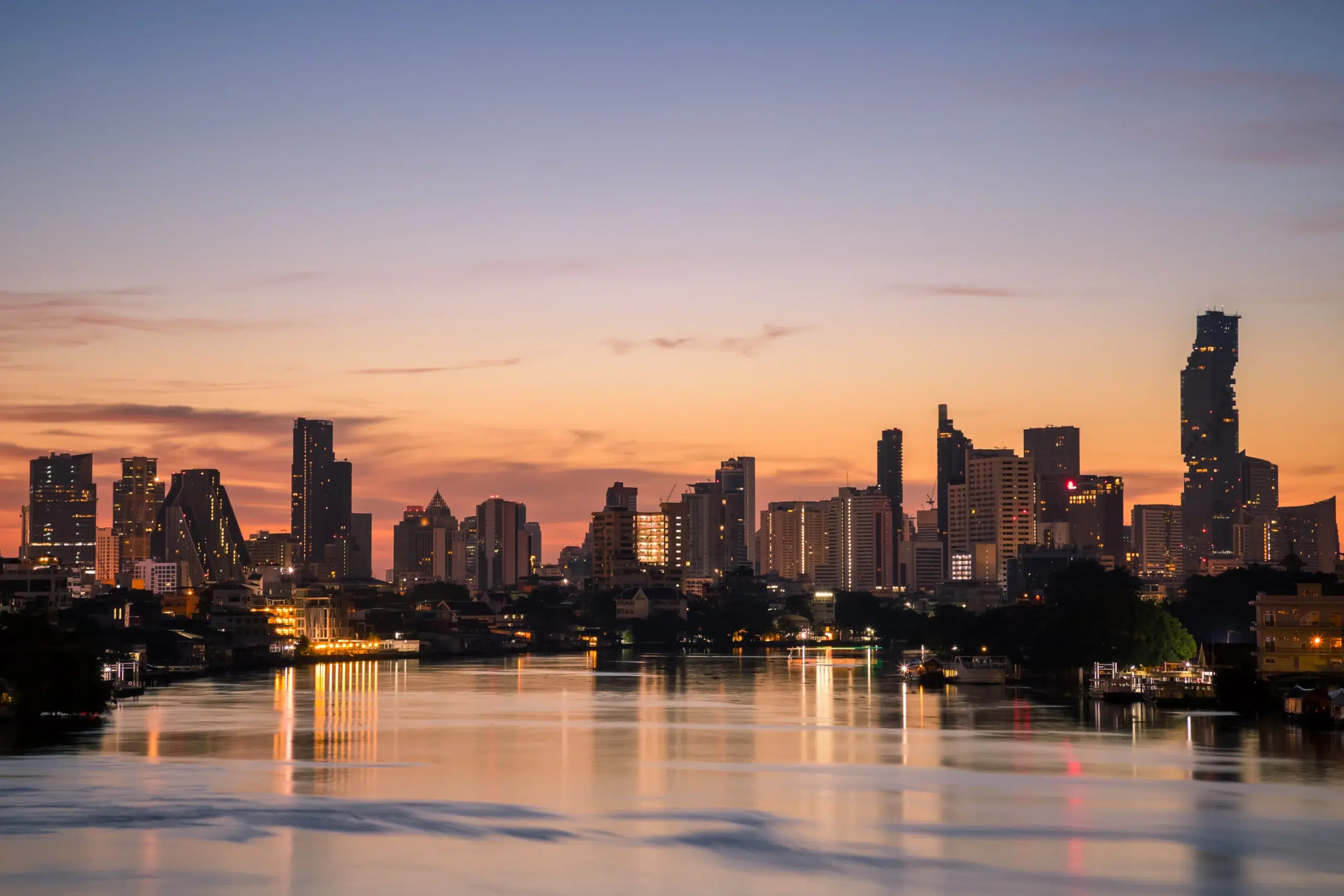
In Bangkok, the future of luxury living apparently involves a car park in the clouds. The Porsche Design Tower, now selling “Sky Villas” priced up to THB1.25 billion (USD40 million), lets residents drive their supercars up a spiral ramp and into glass-walled garages adjoining their living rooms. Forget wellness suites or sound-healing rooms; Here, the centrepiece is a daily automotive performance. A Ferrari or Porsche 911 isn’t simply parked; it’s lit and displayed like a household deity.
It’s hard not to grimace at the excess. The tower’s glowing crown and Mission R-inspired frame are closer to a stage set than architecture, while its “Passion Spaces” elevate parking into theatre. For the ultra-rich, wellness might mean cryotherapy chambers elsewhere. In this case, it’s the quiet comfort of knowing your Lamborghini sleeps beside you.
The spectacle is unashamedly brazen, yet it captures something telling about the region’s shifting definition of luxury. Prestige today is less about square footage or skyline views and more about identity, expression, and display. Bangkok and Tokyo’s rise in Julius Baer’s 2025 Global Wealth and Lifestyle Index—up six places each to 11th and 17th, respectively—underlines the region’s growing appetite for luxury experiences as well as assets.
Across Asia, branded residences are booming, from wellness sanctuaries in Bali to discreet urban projects in Tokyo and automotive-inspired spectacles in Bangkok. The common thread is intent: homes that signal wealth, certainly, but also a worldview.
Related: Seoul’s luxury homes roar back on global demand and scarcity
According to the Asia Branded Residences Market Review 2025 by C9 Hotelworks, the region now has a branded residence pipeline worth USD30.7 billion, spanning more than 67,000 units across 283 developments. “What’s striking is not only the volume, but the structural shift,” says C9 Hotelworks’ founder Bill Barnett. “Branded residences in Asia have matured from niche hospitality extensions into a full-fledged asset class, backed by lifestyle demand, premium design, and deep emotional buy-in from high-net-worth buyers.”
Behind the bombast lie powerful currents. Asia-Pacific is forecast to generate nearly half of the world’s new ultrahigh-net-worth individuals between 2025 and 2028, according to Knight Frank’s Wealth Report 2025. Global data firm Altrata, meanwhile, places Hong Kong and Singapore among the world’s top secondary-home markets for the ultra-wealthy, highlighting how multiple homeownership is fuelling demand.
The buyer base is also diversifying. Millennial millionaires, mobile entrepreneurs, and second-generation investors now sit alongside established family wealth. Knight Frank notes that cross-border residential investment jumped 64% in 2024 to almost USD49 billion. These buyers are more global in outlook, more mobile in practice, and increasingly insistent on homes that flex around health, technology, and convenience.
Branded residences in Asia have matured from niche hospitality extensions into a full-fledged asset class, backed by lifestyle demand, premium design, and deep emotional buy-in
Technology and wellness are now the dual currencies of desirability. Smart home systems that learn daily routines, AI concierges that anticipate preferences, and building analytics that optimise air and energy use are becoming standard in the region’s top developments. Wellness, too, is no longer an add-on spa but an embedded philosophy, seen in biophilic architecture, circadian lighting, and homes designed around recovery and resilience.
Beyond features, however, lies experience. Developers are increasingly layering in curated art collections, cultural programmes, and community design to make residences feel like ecosystems rather than enclaves. Sustainability is also shaping the definition of prime, as green credentials begin to influence how buyers perceive value. According to Christine Li, head of research at Knight Frank Asia Pacific, Knight Frank research suggests that as many as 75% of UHNWIs are now actively seeking to reduce their carbon footprint, partly by prioritising eco-friendly homes. “This convergence of trends—the rise of branded residences, focus on sustainability, and strong price growth in key cities—is reshaping the Asia-Pacific luxury residential landscape,” she adds, “creating new opportunities and challenges for developers and investors alike.”
The Porsche Tower may appear as excess made concrete, but it reflects a wider truth. Asia’s luxury homes are no longer defined by marble and scale. They are shaped by meaning, narrative, and personal alignment. The most coveted properties still deliver space and prestige, but they pair it with intent—homes that anchor identity as much as they house it.
Cinq Royal Krungthep Kreetha | Bangkok, Thailand
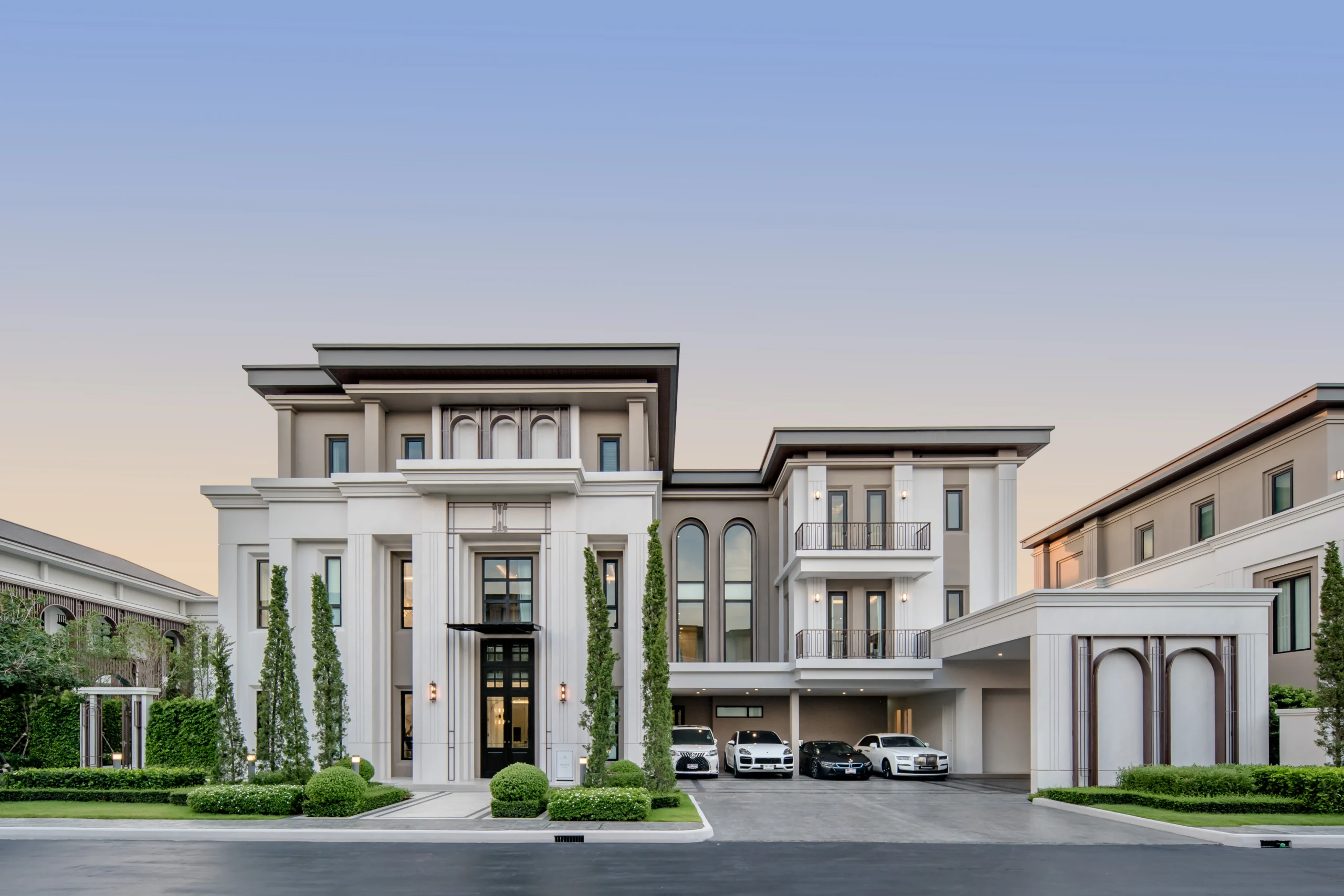
Bangkok isn’t short of high-rise living, but Cinq Royal goes the opposite way: a gated, low-rise enclave where each home sprawls across more than 1,000 square metres. Asset Five Group frames it as a destination for a “society of achievers,” with just 46 residences across 45,600 square metres. The style combines Art Deco, colonial, and classic details under the developer’s “A5 Design” philosophy, with façades in textured paint and stone-patterned tiles. Interiors come fitted with Villeroy & Boch and Küppersbusch, while double-gated security sets the tone for privacy. Shared space is limited to the Cinq Clubhouse and Cinq Parq, conceived as extensions of the homes rather than a spectacle of amenities. With prices topping THB150 million and sales already above 90%, the target is obvious: multi-generational families who want space and discretion without heading to the suburbs.
Jianfa·Zichen | Fuzhou, China
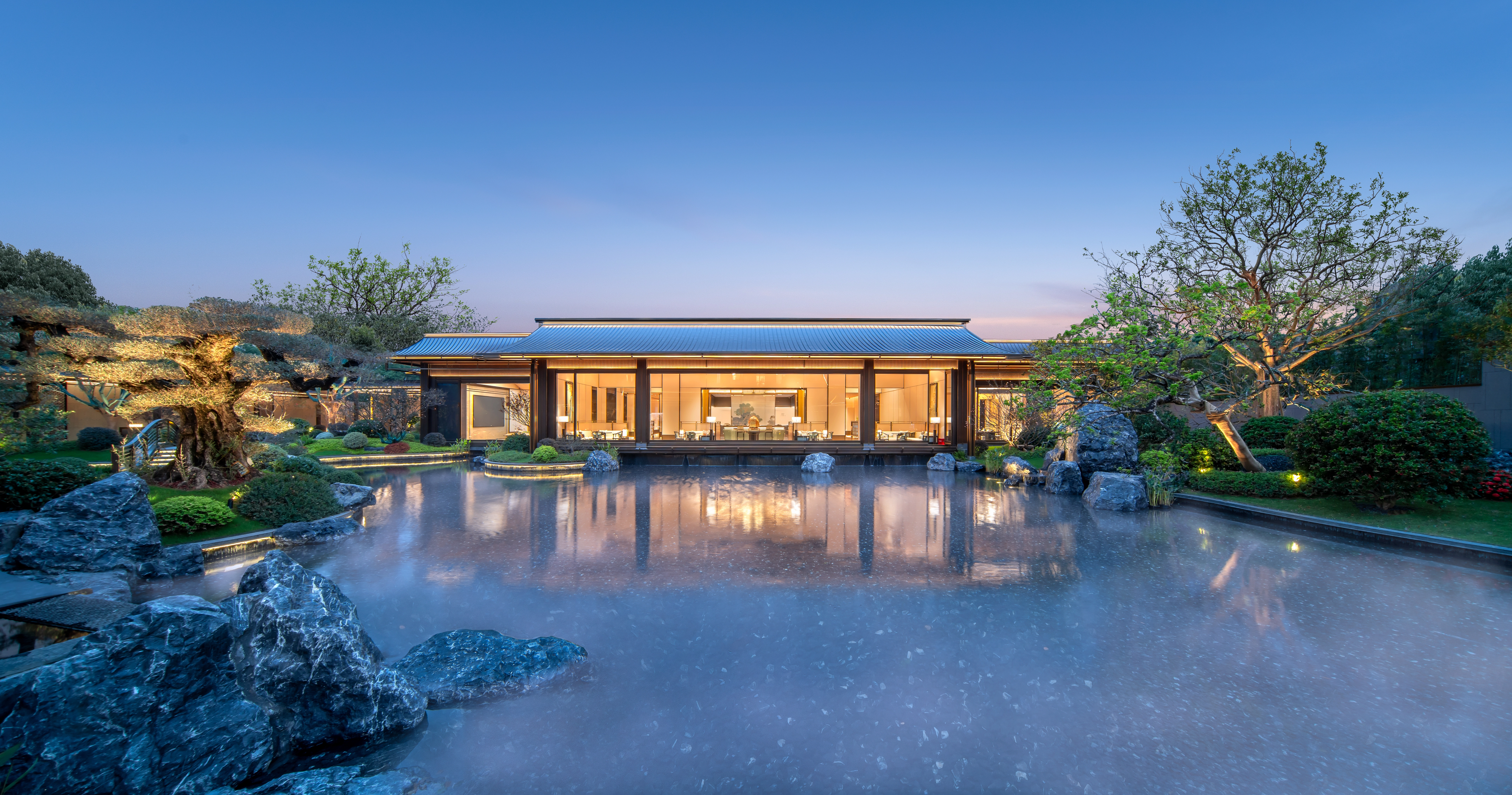
Exclusivity here runs as deep as the hot spring water piped directly into each residence. The 25-storey tower in Fuzhou’s historic Gulou district contains just nine homes—one per floor—turning a vertical format into something closer to a private villa experience. Designed by BAC Design with interiors from Z.Power Interior Design and Research Commune Design, the project draws on Song Dynasty aesthetics, particularly the iconic scroll A Thousand Li of Rivers and Mountains. Courtyards landscaped by WEDO Design echo literati gardens, framing spaces with handselected trees and water features. Beyond the symbolism, it’s a study in craft: rare materials, bespoke detailing, and communal amenities like a hot spring club designed for intimate gatherings. Jianfa·Zichen positions itself less as an apartment block and more as a living museum where ancient aesthetics are reimagined as ultra-luxury.
Meyer Blue | Singapore
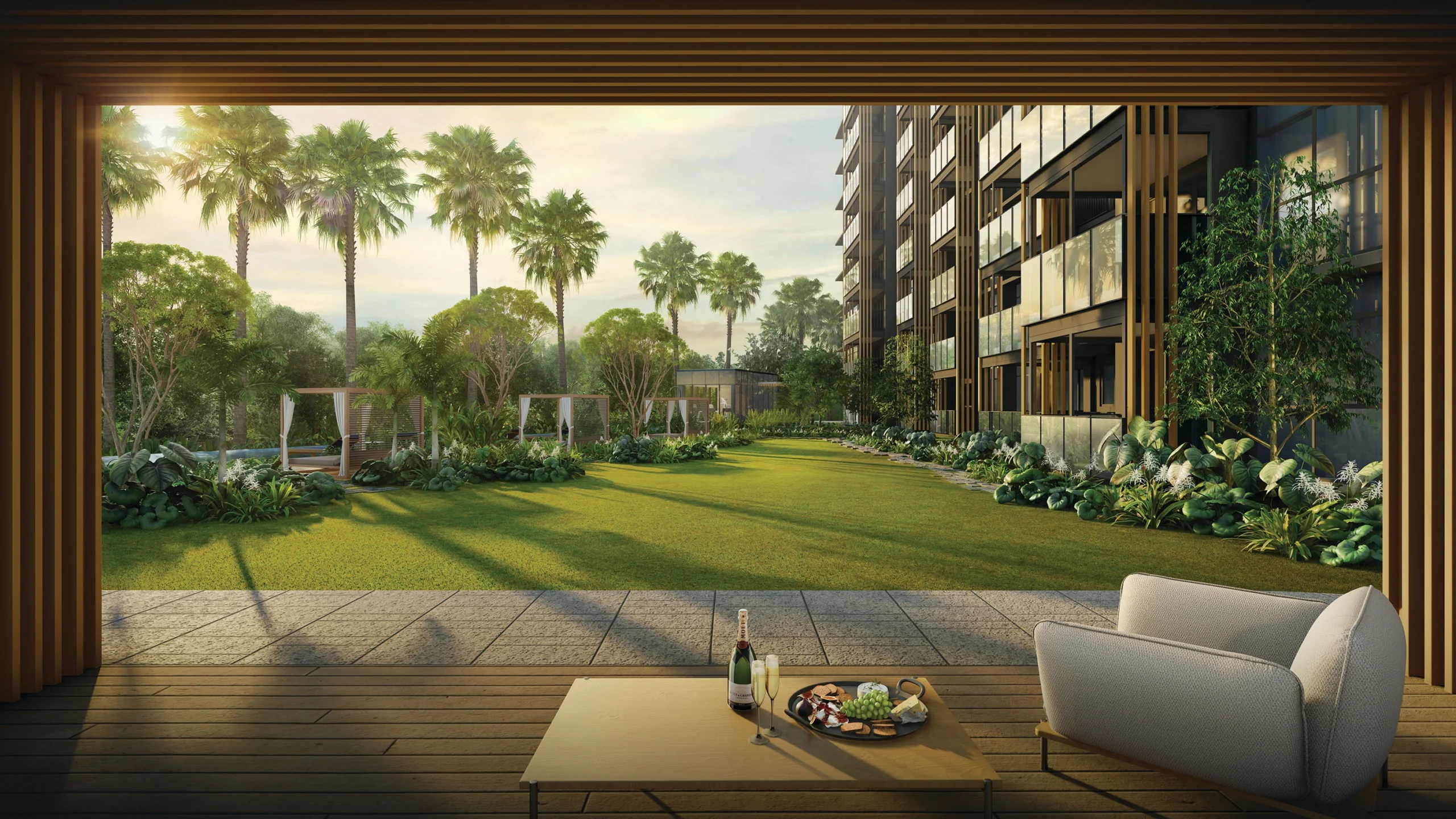
Some towers shout. Meyer Blue leans back with a resort-like calm. Rising 26 storeys on one of the last freehold plots along Meyer Road, the project takes its name—and palette—from the Yves Klein blue of the sea it overlooks. P&T Architects give the tower clean lines, broken by cabana-style frames that climb the façade like sun-bleached timber. Inside, Peter Tay Studio avoids heavy opulence, opting for driftwood textures and sunrise tones more in tune with coastal living. Privacy defines the layouts, with larger units and penthouses accessed by private lifts. The development’s social life converges at The Meyer Club, a sky lounge and terrace that face Marina Bay, while the ground level feels more like a boutique resort with its 40-metre lap pool and manicured lawn. With only 226 homes, it’s a slice of exclusivity pitched to buyers who want urban prestige with a sea breeze.
The Estate Makati | Manila, Philippines
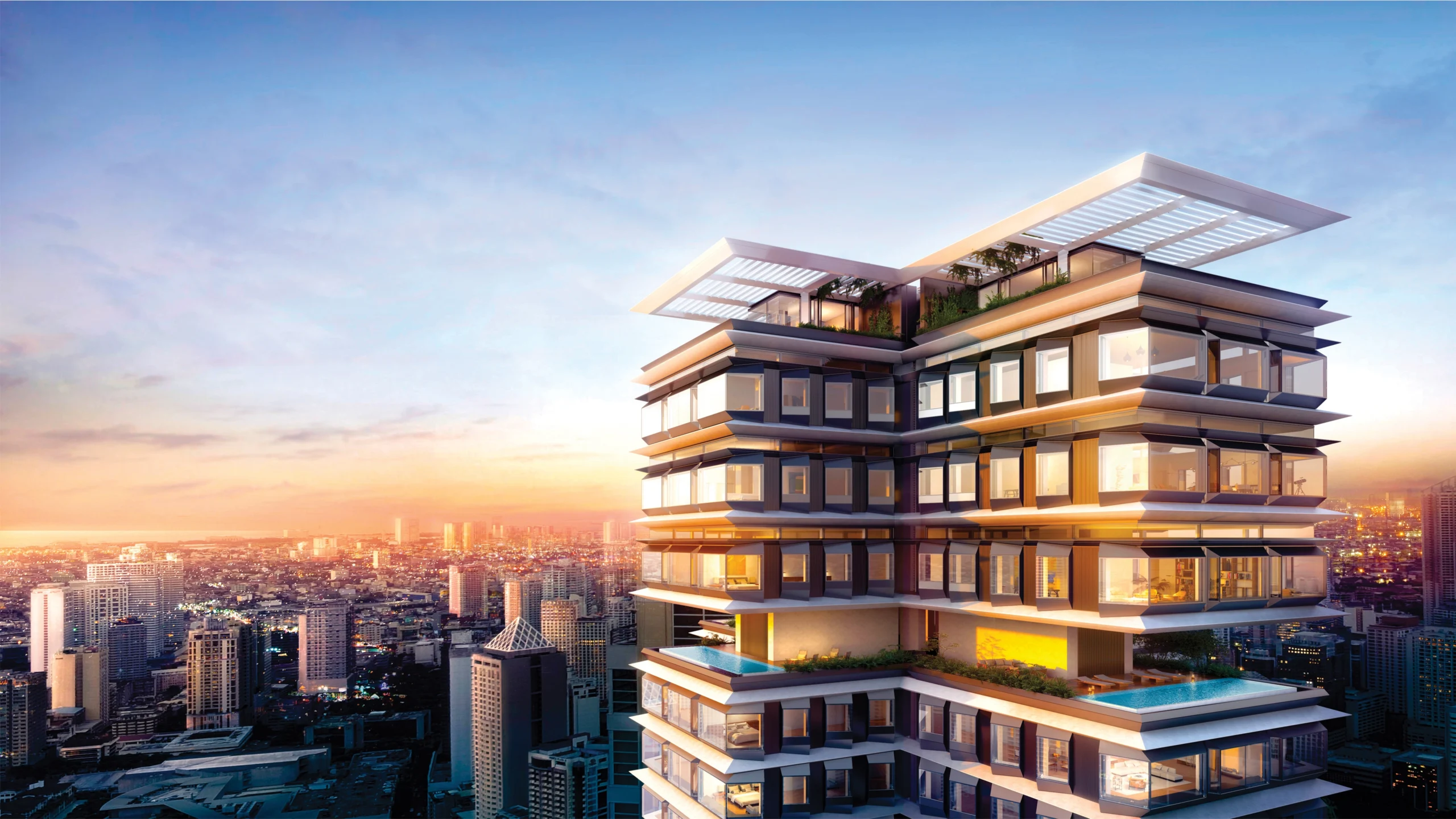
The Estate Makati takes one of Asia’s densest districts and gives every apartment a corner. Designed by Foster + Partners with William V. Coscolluela & Associates, the 60-storey tower uses an “inhabited façade” to push bay windows out from the skin of the building, turning elevations into living space and granting views in multiple directions. Layouts are column-free, effectively offering “lots in the sky” for owners to shape as they please, with no more than four units per floor. Arrival is deliberately discreet, with a tree-lined driveway shielding the drop-off, while interiors lean on bronze, marble, and stone for restrained luxury. Amenities are curated—a wine lounge, golf simulator, and suspended sky garden—and sustainability targets LEED Gold through façade performance, EV-ready parking, and rainwater recycling. With units starting at PHP81 million and topping out above PHP245 million, the project’s appeal lies in pairing Foster’s design pedigree with the privacy of a cruciform plan on Ayala Avenue.
The OpusK Residence | Ho Chi Minh City, Vietnam
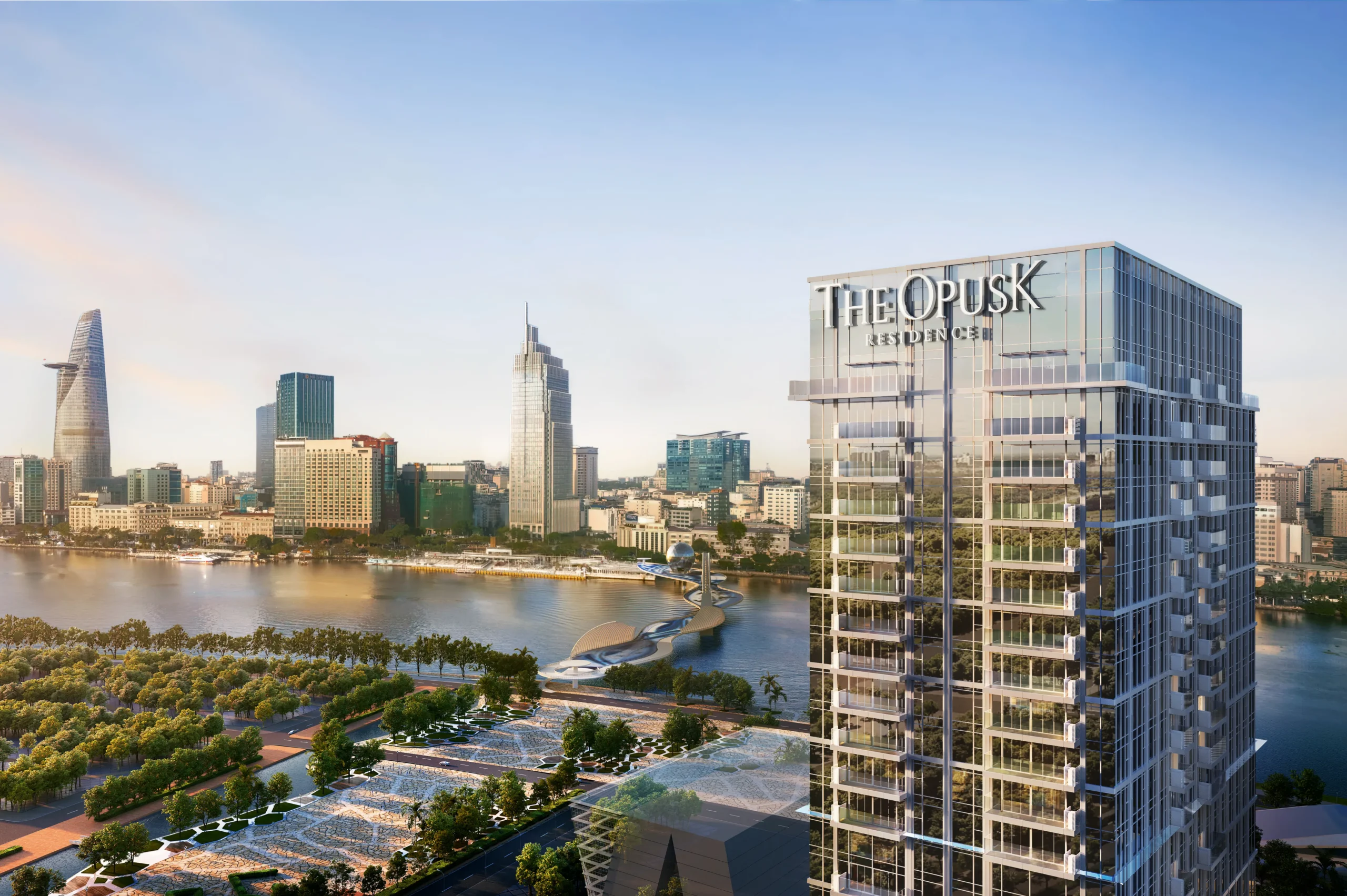
Scarcity is The OpusK Residence’s luxury. In Thu Thiem, a district rising fast with glass and scale, SonKim Land has kept its 36-storey tower to just 119 homes. In a market where ambition is usually measured in unit count, the restraint is deliberate. Interiors by Evocateurs Design prioritise liveability over flash, with muted tones and natural finishes spread across column-free layouts. Courtyards and water features soften the edge of the city, a reminder that Thu Thiem was planned as a green district as much as a financial hub. Amenities follow the same principle: spa, fitness, co-working suites, and even a golf simulator. Prices range from VND18 billion to VND70 billion, with over 70% already sold to families and entrepreneurs seeking permanence in a new centre of gravity for Ho Chi Minh City.
Tresor | Jakarta, Indonesia
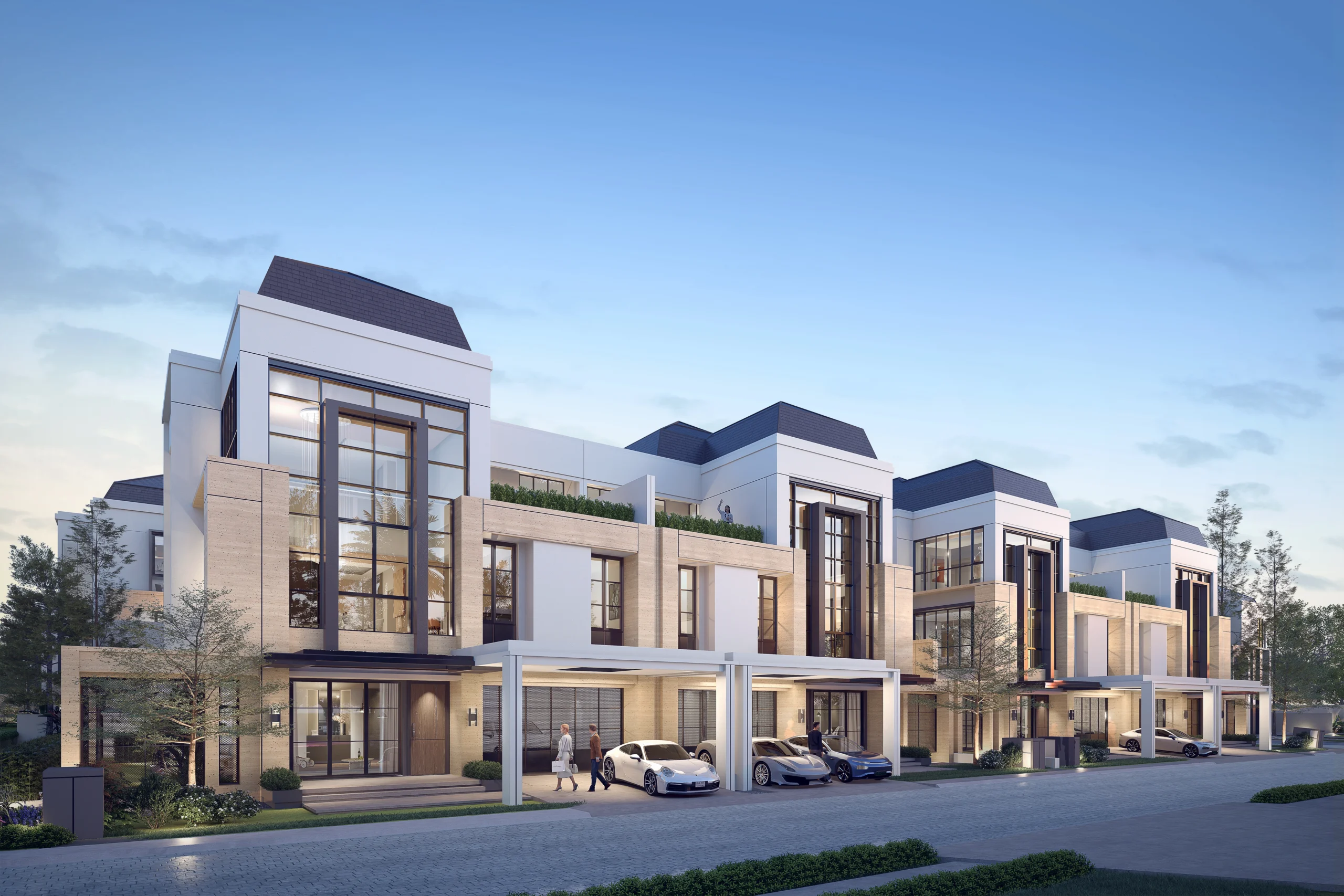
In Jakarta, luxury usually means a penthouse. Tresor flips the equation: 32 homes on 3.5 hectares, each stretching over 1,000 square metres. Sinar Mas Land has positioned itself as an estate within the city. It’s a rare chance at land, privacy, and space in a market dominated by vertical living. Architecture by Airmas Asri keeps the lines modern but understated, while Hadiprana Design layers in warmth through tactile finishes. Landscaping builds green buffers around each home, emphasising discretion over display. Amenities are relatively modest—a clubhouse, wellness facilities, outdoor leisure areas—underscoring that the luxury here is space, not spectacle. For Jakarta’s wealthy homeowners, the project represents solidity: the permanence of land ownership and the intimacy of a lowdensity compound, rather than the flash of another tower.
The original version of this article appeared in PropertyGuru Property Report Magazine Issue No. 192 on Issuu and Magzter. Write to our editors at [email protected].
Recommended

ARES Whitepaper Volume 4: Powering communities – The catalysts of urban evolution
Fresh perspectives on sustainability, lifestyle, and design shaping the future of real estate

ARES White Paper Volume 3: The era of adaptive reinvention
Pioneering sustainable and innovative practices in urban development

ARES White Paper Volume 2: Unravelling the power of data revolution in real estate
Insights on proptech, smart cities, and sustainable development
ARES Digital White Paper Volume 1: The fundamentals of responsible building
Green and climate heroes join forces to discuss how Asia Pacific can weather the current environmental crises and the looming effects of climate change