Why cities plan for decades but finance only for years
Chantale Wong on how mismatched timelines between cities and capital are stymieing Asia-Pacific’s urban future

Urbanisation in the region is frequently framed in physical terms: skylines, density, congestion, and liveability rankings. But the real tension sits elsewhere. It lies between generational ambition and short-term capital. Cities speak in decades, while financing structures, whether public or private, operate on far narrower timelines. That mismatch shapes everything from transit sequencing to housing affordability and climate resilience.
When rail arrives late, land values have already shifted. When housing is built far from employment centres, transport costs quietly erode affordability. When flood defences are treated as engineering projects rather than governance challenges, maintenance gaps widen. These are rarely failures of intent. They reflect misalignment between institutions, incentives, and time horizons.
Across the Asia-Pacific, that coordination challenge is intensifying. The region contains some of the world’s fastest-growing urban populations alongside some of its most climate-exposed coastlines. Informal settlements sit beside high-value commercial districts. Metro systems expand even as car ownership rises. Fiscal pressures mount just as infrastructure needs multiply. The cost of poor sequencing compounds quickly, and the burden rarely falls evenly.
Much of that pressure is invisible. It sits within financing frameworks, land policy, procurement rules, and negotiations between agencies and investors that determine what gets built, where and when. The urban form we see is the outcome of those upstream decisions.
Related: Transforming cities with smart infrastructure and sustainable urban planning
Few people have observed that gap as closely as Chantale Wong. As former US Director and Ambassador-level representative to the Asian Development Bank (ADB), she worked at the intersection of public policy, infrastructure finance, and regional development, where investment decisions shape cities long before projects break ground. Her background in civil and environmental engineering informs a view of cities as interdependent systems, where transport, housing, water, land, and governance cannot be planned in isolation.
From Bangkok’s transit expansion to Manila’s flood vulnerabilities and the evolution of districts such as Bonifacio Global City, Wong has seen how urban performance depends less on individual projects than on how well the pieces connect. Outcomes are shaped long before cranes arrive, in the design of financing frameworks, the sequencing of infrastructure, and the priorities set around decision-making tables.
In a recent exchange, she outlined how the mismatch between generational urban ambition and short-term capital is playing out across the region’s cities, and the decisions leaders can no longer afford to delay.
What do people still underestimate about the pace and long-term consequences of urbanisation across the Asia-Pacific?
People still underestimate how irreversible today’s urban decisions are. Across the Asia-Pacific, land-use, infrastructure, and housing choices made now will shape cities for generations. Once density is built without adequate transport, green space, or flood protection, correcting it later becomes enormously costly, both financially and politically. The consequences show up not just in congestion or housing stress, but in resilience—in who is protected during shocks and who is not.
How has your background in civil and environmental engineering influenced the way you think about cities as systems?
Engineering trains you to think in interdependencies. A road is never just a road—it affects land values, drainage, emissions, and settlement patterns. Cities function as interconnected networks in which transport, housing, water, energy, and ecosystems constantly interact. When projects are designed in isolation, we often solve one problem while creating several others. Systems thinking forces better sequencing and clearer trade-offs.
From your time at the Asian Development Bank, where do you see the biggest gap between how cities want to grow and how that growth is financed?
The biggest gap I’ve seen is between the time horizons of cities and capital. Urban ambition is generational. When a city expands its rail network, redesigns land use, or invests in flood protection, the benefits unfold over decades. Financing—whether public budgets constrained by annual cycles or private capital structured around defined return windows—operates on much shorter timelines.
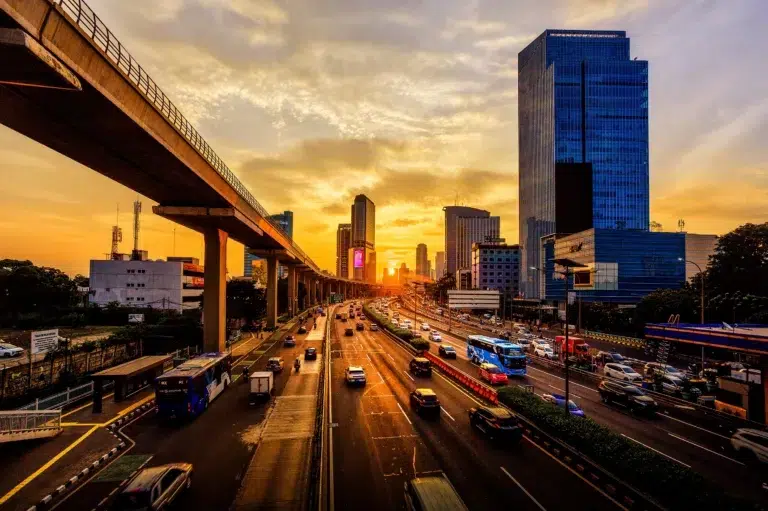
Bangkok offers a useful illustration. The expansion of the BTS and MRT networks has transformed connectivity in parts of the city. Yet transport expansion struggled for years to keep pace with urban growth and car dependency. Land values along transit corridors rose quickly once lines became operational, but aligning early financing with long-term spatial planning required coordination, and patience.
Urban ambition is generational. Financing operates on much shorter timelines
A complementary lesson can be seen in Bonifacio Global City in Manila, now nearing its 30-year mark. Early coordination between land planning, infrastructure sequencing, and relatively patient capital allowed value to compound over time. But even BGC illustrates the limits of project-level success. Transport into and out of the district remains a real challenge.
Cities often succeed or fail in their connections, particularly between housing and transport. Climate risk quickly exposes those weak links. Closing that gap requires financing frameworks that reward durability and integration, not just speed.
Is truly integrated planning across transport, housing, and climate realistic?
It’s realistic, but only when governance aligns incentives. Most breakdowns occur across institutional boundaries. Transport agencies plan corridors, housing agencies plan units, and climate teams plan risk reduction, often on different timelines. Integration requires shared data, shared metrics, and leadership empowered to coordinate across silos. Where it works, someone is accountable for the whole, not just a piece.
Where do governments usually go wrong on housing affordability?
The most common mistake is equating housing delivery with housing affordability. Counting units is politically appealing. But affordability is about access to opportunity, not just supply.
In cities like Bangkok and Manila, housing built at the periphery may appear affordable initially. But if it is far from employment centres or reliable transit, households absorb the cost through long commutes, higher transport spending, and lost time. Over time, that erodes any initial gains.
Related: Young buyers hold the key to unlocking Bangkok’s empty homes
Bangkok’s transit-oriented development shows how location changes value. Condominiums near BTS stations command premiums because proximity reduces transport costs and improves quality of life. The same principle applies at the lower end of the market; affordability depends on integration with transport and services, not simply price per unit.
Affordability also depends on financing structures, including mortgage access, rental regulation, tenure security, and land policy. Without coordinated land-use and infrastructure planning, subsidies can inflate land values rather than lower household burdens. Successful strategies treat housing as part of the wider urban economy.
What strategies can cities employ to reconcile short political cycles with the extended timelines required for infrastructure projects?
They do it by institutionalising long-term planning beyond any single administration. Metropolitan frameworks, independent planning bodies, and durable financing mechanisms help maintain continuity. Leaders still receive credit for progress, but the vision extends beyond them. Cities that succeed treat continuity as a strength, not a constraint.
What roles can private developers and investors realistically play in shaping improved urban outcomes?
Private capital brings scale, speed, and innovation. Developers can deliver housing, regenerate districts, and introduce mixed-use or transit-oriented models. But markets alone will not deliver inclusion or resilience. Governments must set clear rules, price risk appropriately, and invest in enabling infrastructure so private investment reinforces public goals rather than undermines them.
What common errors do cities make when responding to climate and environmental risks, particularly from a governance perspective?
One of the most persistent mistakes is treating climate risk as a purely technical problem. In Manila, flooding is worsened not only by heavy rainfall or sea-level rise, but by trash clogging drainage systems. When waste management, land use, and water infrastructure are planned separately, even well-designed flood defences fail.
This issue is recognised even in well-managed districts like Bonifacio Global City, where waste management is understood as a resilience issue rather than simply a cleanliness one. Resilience depends as much on governance and maintenance as on engineering design. For investors and developers, that matters because operational resilience directly affects asset performance, insurability, and long-term value.
How does leadership representation influence urban outcomes from your experience?
Representation changes risk assessment and priority setting. When leadership reflects a broader range of lived urban experience, different questions get asked: Who uses this transport system? Which neighbourhoods are prioritised for upgrades? How are safety and accessibility defined?
In rapidly growing cities, mobility patterns vary by income level and gender. If those perspectives are absent at senior levels, blind spots emerge. Inclusive leadership doesn’t guarantee perfect outcomes, but it reduces blind spots. Urban outcomes are shaped long before construction begins—at the table where priorities are set.
Looking ahead, what is one decision city leaders must not delay?
They can no longer delay planning for both climate-resilient and affordable urban growth. Treating housing, transport, and resilience as sequential problems is no longer viable. Delay compounds. The cities that act now will define the region’s urban future.
The original version of this article appeared in PropertyGuru Property Report Magazine Issue No. 195 on issuu and Magzter. Write to our editors at [email protected].
Recommended

ARES Whitepaper Volume 4: Powering communities – The catalysts of urban evolution
Fresh perspectives on sustainability, lifestyle, and design shaping the future of real estate
ARES White Paper Volume 3: The era of adaptive reinvention
Pioneering sustainable and innovative practices in urban development

ARES White Paper Volume 2: Unravelling the power of data revolution in real estate
Insights on proptech, smart cities, and sustainable development
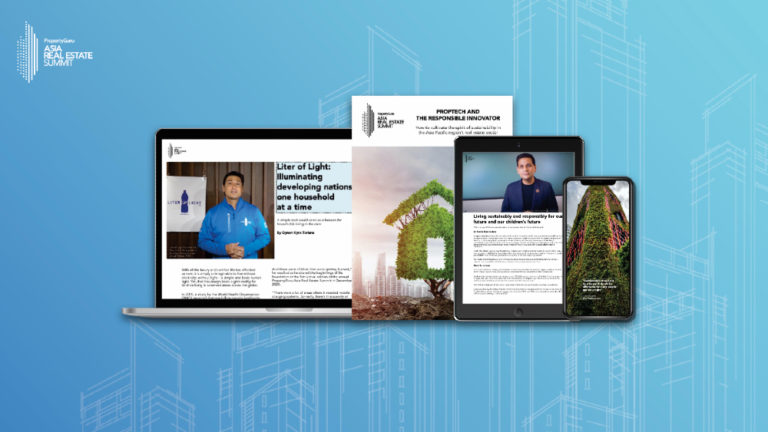
ARES Digital White Paper Volume 1: The fundamentals of responsible building
Green and climate heroes join forces to discuss how Asia Pacific can weather the current environmental crises and the looming effects of climate change