Young buyers hold the key to unlocking Bangkok’s empty homes
The Thai capital’s skyline still rises, but 730,000 vacant units and sluggish demand point to a market out of sync with its next generation of buyers
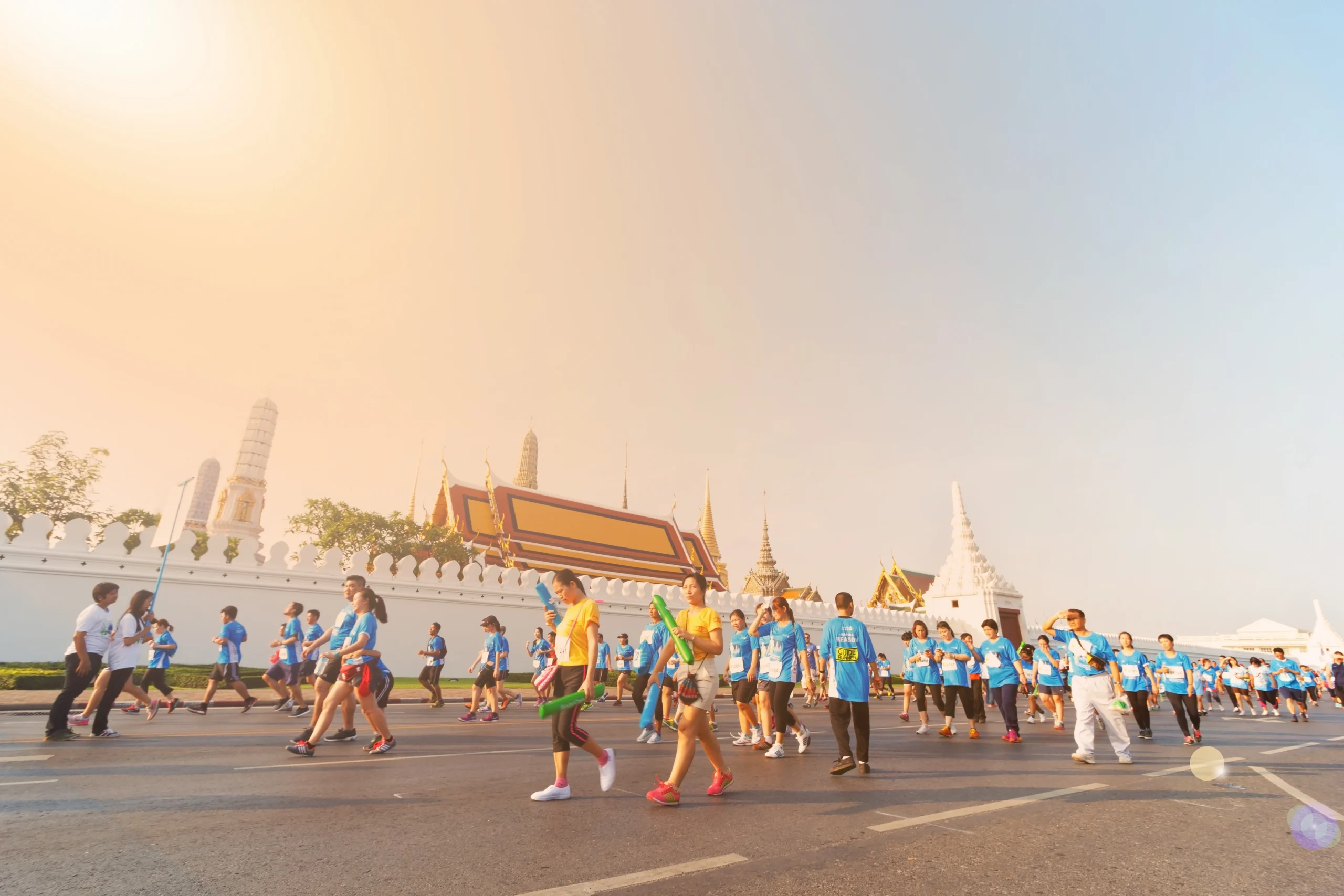
It might not be immediately obvious from the city’s busy streets and neon-lit skyline, but across Bangkok, hundreds of thousands of properties stand empty.
In one low-rise apartment complex, a real estate agent points to an entire block that has been vacant for nearly a year.
“It’s been tough,” he says. “There just hasn’t been much take-up these past couple of years.”
Towards the end of last year, the Thai Real Estate Research and Valuation Centre reported that 1.64 million housing units across Thailand were lying empty, with the worst of it—730,000 units—concentrated in Bangkok.
It represents an economic waste of about THB3.45 trillion (USD109 billion), a figure nearly equivalent to the nation’s annual budget.
The extent of the glut is most visible along the small streets, or sois, off Sukhumvit. Overgrown gardens encircle neglected houses, while cars sit outside under mould-stained tarpaulins.
Bangkok’s empty homes are not evenly distributed across the city. Many are concentrated in mid-market condominium developments built during the boom years of the late 2010s, particularly along new transit lines on the city’s outskirts.
Developers raced to capture speculative demand from investors and overseas buyers, leaving large pockets of inventory that now sit half-occupied or entirely dark at night.
Bangkok has consistently ranked among the best cities to live in, according to various surveys. Last year, Time Out gave it the top spot in its first-ever global ranking of the best cities for the under-30 generation.
In its poll of Gen Z respondents in Bangkok, 84% reported being happy with life in the city, citing community, affordability, and lifestyle.
Whatever stock there is in the market, it’s getting outdated very quickly. It doesn’t match today’s consumer anymore
Yet despite its popularity, the city is failing to attract enough people to live in, rent, or buy property.
Marciano Birjmohun, vice chairman of the Singapore-Thai Chamber of Commerce, says Thailand is struggling to keep pace with changing buyer expectations. “Whatever stock there is in the market, it’s getting outdated very quickly. It doesn’t match today’s consumer anymore.
“The amenities are outdated, the functionality of the units is no longer applicable, and the investment group is becoming much younger. We have a big population of millennials with lifestyle aspirations, and Bangkok cannot compete with the existing supply—not the new supply, but the existing supply.”
Bangkok’s housing glut can be traced back to 2019, when data from the Bank of Thailand showed unsold condominium units in the city and surrounding areas beginning to rise as completions outpaced absorption.
The slowdown worsened in April 2019, when the Bank of Thailand introduced stricter loan-to-value rules aimed at cooling speculation. Investors were required to put down larger deposits on second and third homes, quickly dampening condominium demand.
Within a year, the pandemic shut Thailand’s borders, and foreign buyers were effectively excluded. Completions scheduled for 2019–2020 were pushed into 2023–2024.
For developers, however, there was little choice but to press on. Land had already been acquired and financing secured during more optimistic years, leaving companies under pressure to build.
The result was a pipeline that kept moving long after demand had weakened. Projects conceived during the peak years of 2016–2018 continued to be completed well into the mid-2020s, adding supply to a market already struggling to absorb earlier waves of development.
By the time travel restrictions were lifted, household debt in Thailand had climbed to among the highest levels in Southeast Asia, limiting domestic buyers’ ability to absorb excess supply.
Mortgage affordability has become a growing constraint. With household debt hovering around 90% of GDP, banks have grown more cautious about lending, particularly to younger buyers entering the market for the first time. That has further slowed the pace at which unsold units can be absorbed.
Related: Trust gap slows Chinese tourism and property investment in Thailand
Today, locals are finding it increasingly unaffordable to buy, while foreigners are hesitant to invest, Birjmohun says. Income growth has been minimal for locals.
According to Deloitte, salaries in Thailand increased by 4.5% in 2025, below the historical average of 5%, due to “cost pressures and an economy that has not fully recovered, requiring organisations to manage their salary budgets with greater caution.”
Birjmohun also argues that unemployment is higher than official statistics suggest. Last year, the government put unemployment at 0.81%.
Among foreign investors, he says, “confidence is really low right now.”
One reason is uncertainty around bank accounts. Since September, banks have been freezing or closing accounts as part of a crackdown on financial crimes across the region.
Bangkok Bank has taken particularly robust action. To open new deposit accounts, applicants must now hold long-term visas, be married to Thai nationals, or own property in Thailand, among other criteria.
“I can’t confirm that an account being blocked necessarily means it will be closed,” a Bangkok Bank official told the Bangkok Post. “In certain cases, clients are asked to come to the branch to sort out the situation. Sometimes we need to conduct a face scan to confirm biometric data.”
On expatriate forums, users report accounts being frozen without warning.
“Mine is frozen. Didn’t know it until I tried to pay for something. And another thing. And another thing. All wouldn’t let me pay,” wrote one user.
Another posted: “I’m in Thailand on a retirement visa, and I see my account is locked without any advice. Same for many foreigners across the country.”
Related: Tokenising property in Thailand is reshaping investment futures
Looking ahead, some experts fear Bangkok’s oversupply could spread to traditionally safer havens such as Phuket if confidence weakens there as well.
Phuket has become a popular alternative to the capital. This year, developer Sansiri announced plans to launch around 20 new projects in the province over the next three years, aiming to achieve THB24 billion in sales by 2028. That would mean developing nearly as many properties in three years as it has in the previous 15.
“Phuket remains a key market for Sansiri,” said Uthai Uthaisangsuk, the company’s president, in January.
Poomipak Julmanichoti, Sansiri’s chief strategy officer, added: “Property prices in Phuket have risen in recent years, positioning the island as the second most significant market after Bangkok for attracting both domestic and international investors.”
However, property consultancy Colliers expects 10,000 new flats to enter the Phuket market this year, potentially worsening the glut. Unsold inventory reached 4,982 units across 16 projects at the end of the fourth quarter last year. Analysts say the causes mirror those in Bangkok.
If there is a bright spot, it may be Chiang Mai, says Birjmohun. “Chiang Mai is doing fantastically now in housing developments for Burmese and Chinese buyers with old money.”
Developer Ornsirin is doubling down on the city “because they’re selling really well to foreigners.”
Birjmohun attributes the city’s resurgence to the property cycle. “Chiang Mai had appeal in 2016 and 2018. It went down, and now it’s back on the market again. It’s the lifestyle and affordability compared with Bangkok.”
For Bangkok, however, the adjustment may take longer. Until incomes rise, credit loosens, or developers slow construction, analysts say the city’s skyline may continue to grow even as many of its homes remain empty.
The original version of this article appeared in PropertyGuru Property Report Magazine Issue No. 195 on issuu and Magzter. Write to our editors at [email protected].
Recommended

ARES Whitepaper Volume 4: Powering communities – The catalysts of urban evolution
Fresh perspectives on sustainability, lifestyle, and design shaping the future of real estate

ARES White Paper Volume 3: The era of adaptive reinvention
Pioneering sustainable and innovative practices in urban development

ARES White Paper Volume 2: Unravelling the power of data revolution in real estate
Insights on proptech, smart cities, and sustainable development
ARES Digital White Paper Volume 1: The fundamentals of responsible building
Green and climate heroes join forces to discuss how Asia Pacific can weather the current environmental crises and the looming effects of climate change