How the Gold Coast became Australia’s hottest property market
For decades, the Queensland beach enclave was seen as a pleasure retreat. Now it is becoming a haven for investors
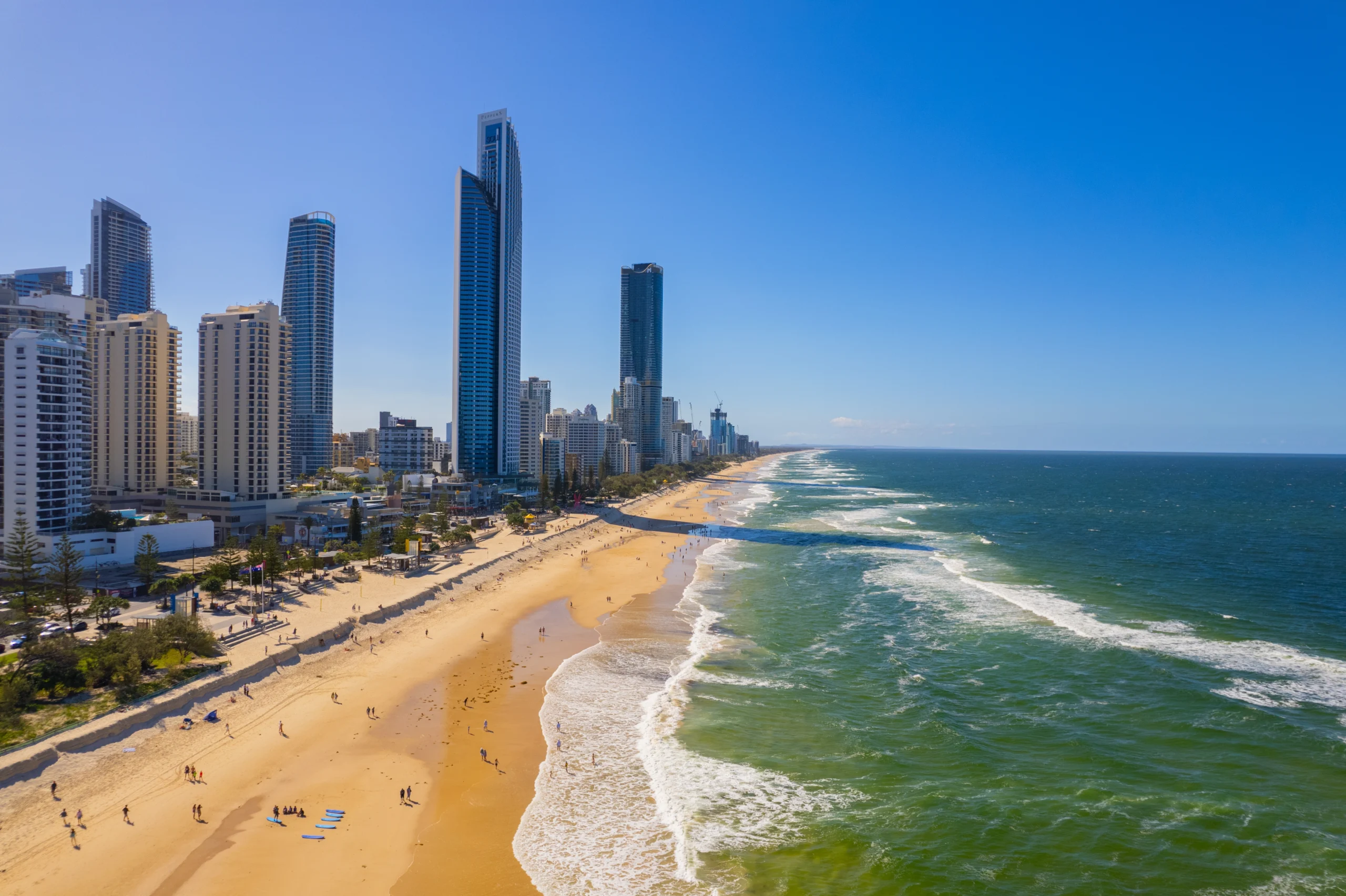
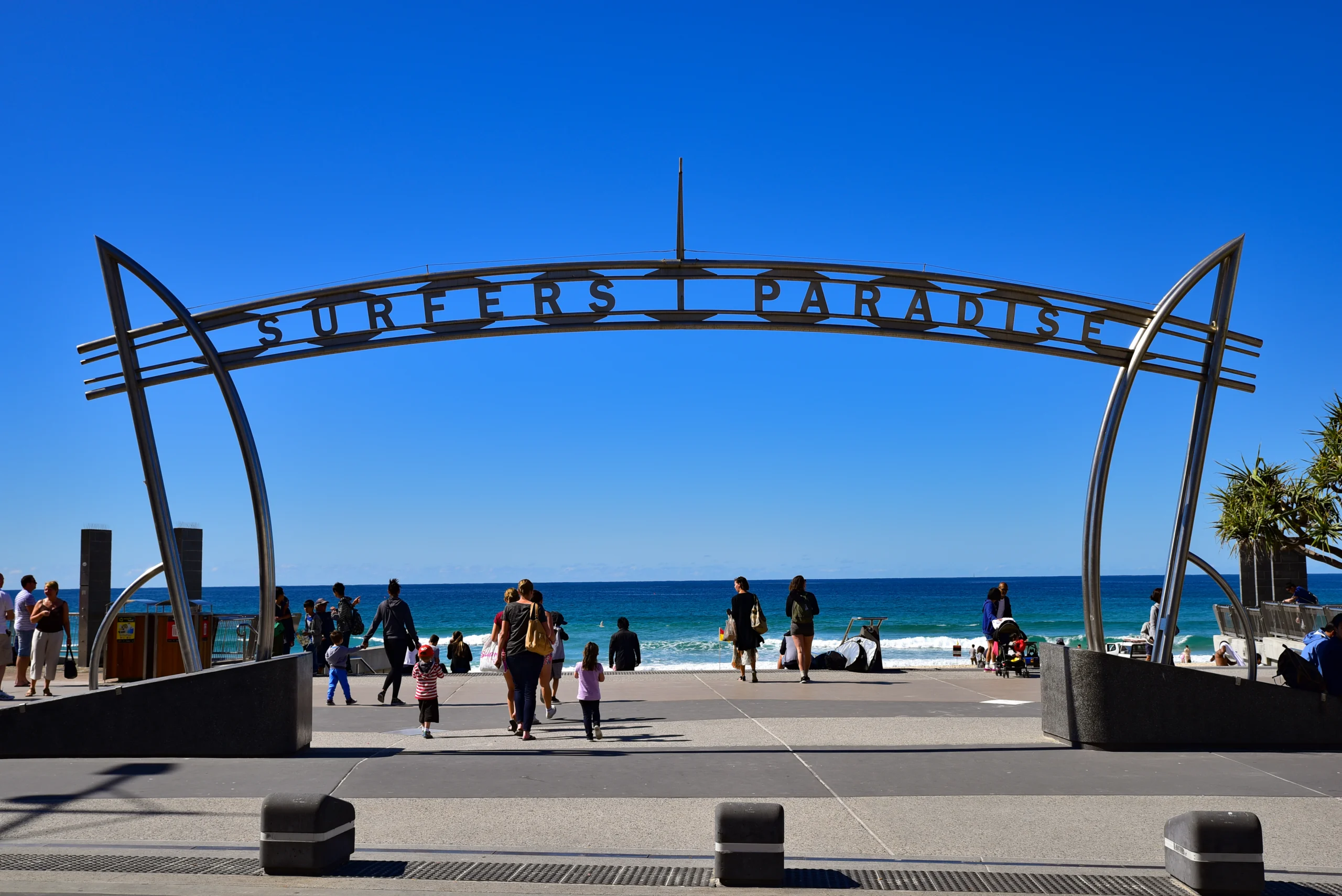
Jim Cavill understood the power of a good story, having fictionalised much of his life in the name of savvy marketing. But when the flamboyant Englishman opened his Surfers Paradise Hotel on the Gold Coast in 1925, it was a story that needed no spin. Such was its success that it turbocharged a tourism industry that has endured to this day.
The Gold Coast has long been synonymous with glorious beaches and laidback vibes. But since the pandemic, more and more people have been coming to live and work, making it more than just a place to while away the days and turning it into one of Australia’s most sought-after property investment destinations.
As Melbourne and Sydney faced another challenging year in their residential markets, the Gold Coast recorded several record-breaking apartment sales, particularly in the south. “Gold Coast is like our Hawaii,” says Benson Zhou, head of Asian sales at Savills Australia. “We love to go there on holiday. In recent years, after the pandemic, a lot of people moved there, driving prices significantly higher.”
Some 6.5 million domestic visitors spent AUD3.7 billion (USD2.5 billion) on the Gold Coast in the first six months of this year, while 636,000 international visitors spent a record AUD1.5 billion over the year, according to Tourism Research Australia.
Demand for luxury beachfront apartments has remained strong over the past year, with projects across Mermaid Beach, Broadbeach, and Burleigh Heads fetching record prices per square metre. In September, the Gold Coast’s median apartment price reached AUD956,000, edging past Sydney’s AUD927,000 for the first time on record.
Gold Coast is like our Hawaii. We love to go there on holiday. In recent years, after the pandemic, a lot of people moved there, driving prices significantly higher
In the exclusive Northcliffe enclave of Surfers Paradise—named after Cavill’s bar—more than 80% of apartments at the residential tower Coast on Garfield Terrace, totalling AUD280 million, have sold off the plan. At the Sea Glass project in Broadbeach, off-the-plan sales have reached around AUD160 million, with more than 60% of apartments in the 26-storey tower now under contract.
“Luxury continues to be the top performer, with the high-end market significantly outperforming the broader market,” says Nerida Conisbee, chief economist at Ray White, adding that house prices rose 9% over the past year.
The Gold Coast’s performance stands in marked contrast to that of Melbourne and Sydney. Charter Keck Kramer, a property consultancy, stated that overall apartment supply in Melbourne improved in 2025 compared to 12 months earlier, although it remains well below target levels, with certain segments performing worse than others. “2025 was another incredibly difficult year for the Melbourne build-to-sell market, and the industry is to be commended for enduring these conditions,” the firm says. “Melburnians are extremely negative about Melbourne; however, interstate and overseas investors hold different views and can see significant value in the city at present.”
Related: Australian real estate heats up in 2025 amid global shifts
In Sydney, developers also struggled to push through new projects in 2025. While house prices nationwide jumped in November, gains in Sydney and Melbourne slowed amid concerns there would be no interest rate cuts anytime soon to support buyers in already expensive markets. Home prices nationwide increased 1% in November from October to a median value of AUD888,941, slightly slower than the 1.1% rise the previous month, according to figures from property consultancy Cotality. Prices have risen 7.5% YTD (until the end of November 2025).
At her final press conference of the year in December, Reserve Bank of Australia governor Michele Bullock ruled out interest rate cuts for the foreseeable future. Traders are now pricing in a one-in-three chance of a rate increase in February and are fully priced for a move by May.
Analysts expect the Gold Coast to continue performing well over the coming year, although it will not be immune to challenges faced elsewhere, including a shortage of construction workers. A November report from Infrastructure Australia stated that a record AUD242 billion worth of major projects are planned over the next five years, up from the previous year’s estimate of AUD213 billion. The independent agency says 141,000 workers are needed to meet current demand, rising to 300,000 by 2027, when projects are expected to enter a crunch phase.
On the Gold Coast, construction companies are under increasing pressure to build taller buildings to cope with rising demand for housing. “In the past, buildings were only about 20 storeys, so you didn’t need high-rise developers,” says Zhou. “But in recent years, there have been more and more towers going up. The challenge will be similar to Melbourne and Sydney—trying to secure skilled builders, and developers.”
The government has relaxed visa rules to encourage more foreign workers to enter the building trade, but critics argue the measures are neither fast nor comprehensive enough. “The looming workforce crunch is a wake-up call,” warns Jon Davies, chief executive of the Australian Constructors Association. “Improving productivity is the answer, and it will require governments, industry, and unions to work differently.”
Related: How Australia’s housing market is embracing suburban resilience
Some say the government has until the 2032 Olympics to tackle the issue. The Gold Coast will host 16 events during the Brisbane Games and will see one of its leading golf courses—the Royal Pines Resort—demolished and redeveloped to house thousands of athletes in an Olympic village. The Queensland government says the Games will also act as a catalyst for new rail lines and stations, along with road upgrades, including faster rail between the Gold Coast and Brisbane.
Zhou says that as the city grows, the Gold Coast will need more schools, hospitals, police, and construction workers. While pressures could become critical, he believes there is still time. “The Gold Coast should have very healthy growth between now and the Olympics. So far, it looks sustainable and is heading in the right direction,” he says.
The original version of this article appeared in PropertyGuru Property Report Magazine Issue No. 194 on issuu and Magzter. Write to our editors at [email protected].
Recommended

ARES Whitepaper Volume 4: Powering communities – The catalysts of urban evolution
Fresh perspectives on sustainability, lifestyle, and design shaping the future of real estate

ARES White Paper Volume 3: The era of adaptive reinvention
Pioneering sustainable and innovative practices in urban development

ARES White Paper Volume 2: Unravelling the power of data revolution in real estate
Insights on proptech, smart cities, and sustainable development
ARES Digital White Paper Volume 1: The fundamentals of responsible building
Green and climate heroes join forces to discuss how Asia Pacific can weather the current environmental crises and the looming effects of climate change