South Korea’s apartment developers wrestle with solar mandates
New regulations are forcing South Korea’s apartment developers to generate their own energy, much of it from solar, marking a major shift in how the country’s residential buildings are designed and built
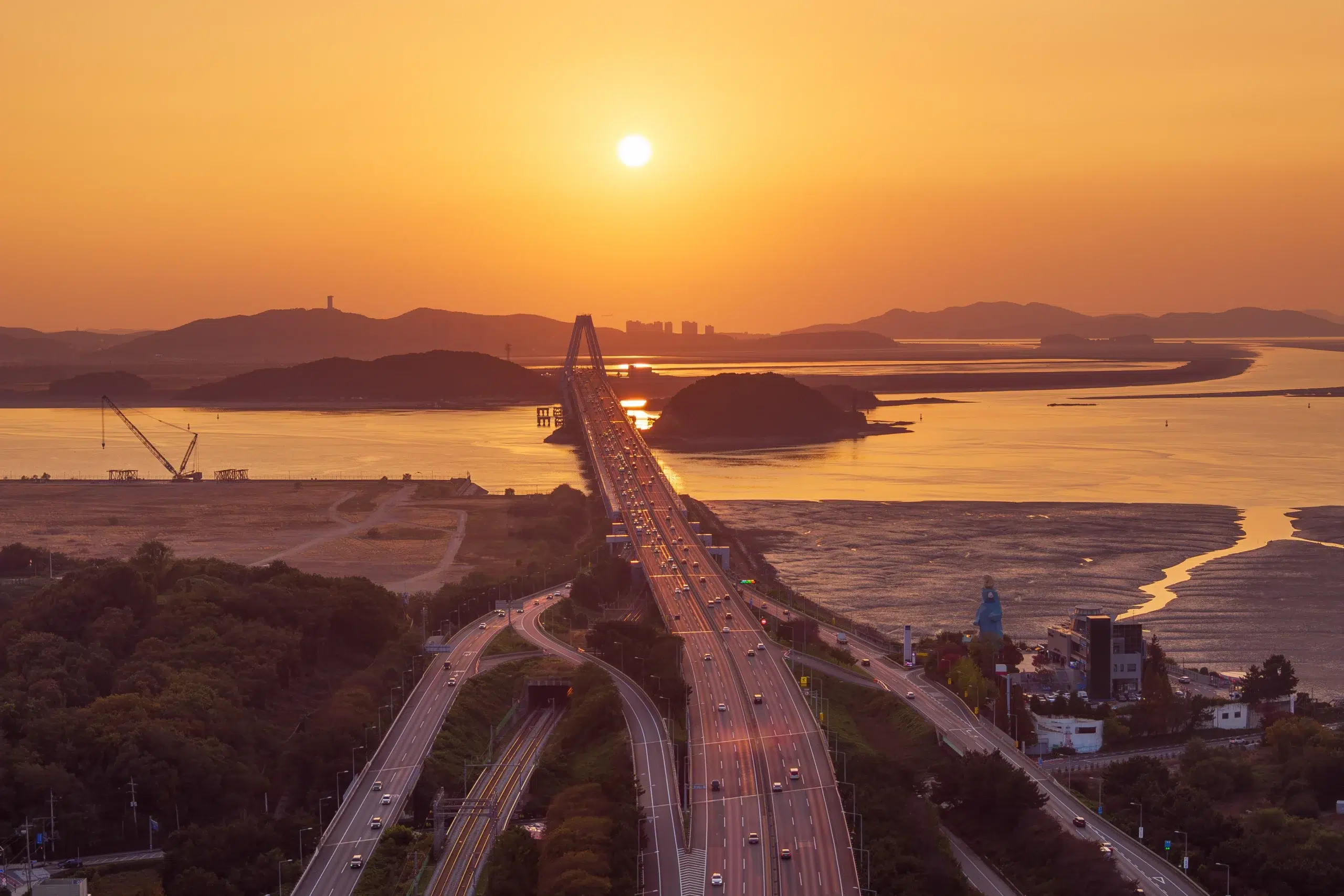
When Incheon announced the latest phase of its expanding residential district, Geomdan New Town, in early June, its energy self-sufficiency requirements were progressive, even by South Korean standards.
Located 30 kilometres northwest of Incheon International Airport, the new town requires private developers to construct apartments with a Zero-Emission Building (ZEB) rating of at least Grade 4, meaning buildings must produce at least 20% of their own energy. Having first established Geomdan as an energy-efficient satellite of Seoul in the late 2000s, this latest stage of the development is its most ambitious yet in terms of energy use.
“Geomdan New Town is the fastest-growing area in Incheon in terms of population,” says Ryu Yun-ki, president of Incheon Metropolitan City Urban Development Corporation, the public housing arm of the city government. “We will create an eco-friendly residential complex that matches the concept of this special zone.”
Related: Seoul’s luxury homes roar back on global demand and scarcity
After passing a series of new construction regulations, including new standards for apartment buildings in June and December of last year, South Korea now ranks among the most ambitious nations in Asia—alongside Japan—when it comes to energy efficiency standards for housing.
In June last year, the Ministry of Land, Infrastructure and Transport (MOLIT) issued new rules requiring newly constructed, privately developed apartment buildings to produce at least 13% of their own energy. The regulation is considered an industry game-changer in South Korea because residential buildings were previously not required to produce any of their own energy.
The ZEB ratings dictate that Grade 5 is the minimum requirement, while Grade 1 is the highest, with up to 100% energy self-sufficiency, as South Korea works towards net-zero greenhouse gas emissions by 2050.
Improving the energy performance of private buildings, which account for the majority of buildings, is an essential task to achieve greenhouse gas reduction targets
Rooftop solar is now viewed as the primary answer to changing energy codes, alongside increased insulation and other energy-saving measures that reduce overall energy demand and, in turn, the amount of energy buildings need to generate.
South Korea had originally planned to phase in mandatory Grade 5 certification for new private apartment developments with more than 30 units—meaning 40% energy self-sufficiency—from the start of 2024. The government has argued that private sector developers have long lagged behind the public sector, which has been subject to Grade 5 ZEB requirements since 2023.
“While the public sector has led zero-energy building initiatives so far, improving the energy performance of private buildings, which account for the majority of buildings, is an essential task to achieve greenhouse gas reduction targets,” says Hong Seongjun, head of the Green Building Division at MOLIT.
However, in 2023, the industry became increasingly vocal about what the new requirements would mean for developers’ costs, and ultimately apartment prices, amid a surge in residential prices and a national debate over housing affordability.
The Architectural Institute of Korea, among the industry groups pushing back against stricter ZEB rules, warned that mandatory Grade 5 requirements would raise construction costs by 35%.
In response to industry pressure, when the new requirements were due to come into effect in early 2024, the government announced a one-year postponement before continuing consultations with the private sector into mid-2025.
As a result, the new rules announced in June last year read like a compromise. Instead of requiring full Grade 5 certification, including 40% energy self-sufficiency, new private apartment developments must instead produce a minimum of 13% of their own energy. MOLIT claims this will translate into annual energy savings of KRW220,000 (USD145) per household, while increasing construction costs by KRW1.3 million (USD860) for an 84-square-metre unit, “estimated to be recovered in five or six years”.
Related: 6 projects designed for people and planet
While the new rules primarily focused on increasing the energy production of buildings, further regulations introduced in December imposed stricter requirements on energy demand.
For developers, the new rules mean designs must include provisions for the installation of additional renewable energy systems and high-performance energy features, including insulation, during the building permit stage of a project, says Jimmy Park, head of ESG Solutions at CBRE South Korea.
“Industry concerns around energy regulations do exist,” Park tells Property Report. “But they tend to be absorbed into the broader conversation about cumulative regulatory burdens rather than surfacing as pushback specifically against ZEB standards.”
In a bid to reduce costs and demonstrate the benefits of energy savings, public-private sector collaborations have been launched alongside the introduction of the new regulations.
Last year, a research and development consortium was formed that includes Ewha Womans University in Seoul alongside Samsung, Posco E&C, Lotte E&C, and LH, to collaborate over five years. Among the first projects is a 27-storey housing complex in Gunpo, south of Seoul, with 60% energy self-sufficiency. Solar panels will be installed across the “entire exterior walls and rooftop of the main building”, LH says in a statement announcing the project in November.
While the ZEB requirements have added to the cost burden for private developers in South Korea, the country’s Construction Cost Index, compiled by the Korea Institute of Civil Engineering and Building Technology, climbed 34% between 2020 and the start of this year. Reports in South Korea’s trade press have also pointed to similar increases in labour costs amid a shortage of construction workers since the pandemic.
“Construction cost pressures in South Korea’s apartment sector are significant, but energy efficiency requirements are not the main driver,” says Park of CBRE. “The more acute pressures come from rising labour and material costs alongside tightening safety regulations.”
The original version of this article appeared in PropertyGuru Property Report Magazine Issue No. 197 on Issuu and Magzter. Write to our editors at [email protected].
Recommended

ARES Whitepaper Volume 4: Powering communities – The catalysts of urban evolution
Fresh perspectives on sustainability, lifestyle, and design shaping the future of real estate

ARES White Paper Volume 3: The era of adaptive reinvention
Pioneering sustainable and innovative practices in urban development

ARES White Paper Volume 2: Unravelling the power of data revolution in real estate
Insights on proptech, smart cities, and sustainable development
ARES Digital White Paper Volume 1: The fundamentals of responsible building
Green and climate heroes join forces to discuss how Asia Pacific can weather the current environmental crises and the looming effects of climate change